











We are living in the golden age of mobile content. You have an iPhone 15 Pro or a Samsung S24 Ultra in your pocket. It shoots stunning 4K video, features cinematic stabilization, and handles low light like a dream. You spent over $1,000 on this device to ensure your content looks professional.
But there is a dirty secret in the smartphone industry. While camera sensors have grown massive, the microphones have stayed tiny.
In this deep dive, we are comparing the NearStream AM25X against the best smartphones on the market to show you exactly what you are missing, and why upgrading your audio is the single biggest ROI (Return on Investment) for your channel.
The Physics of Failure: Why Phones Can't Compete
Before we get into specific scenarios, we need to understand why the gap exists. It’s not that phone manufacturers are lazy; it’s that they are constrained by space.
The Diaphragm Size (The Bucket Analogy)
Think of sound like rain, and a microphone like a bucket catching that rain.
- Smartphone Mic: The "bucket" is the size of a thimble. It catches very little data. It misses the low frequencies (bass) and the subtle high frequencies (air).
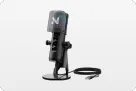
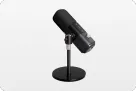
- AM25X: The "bucket" is a Large Diaphragm Condenser. It catches a massive amount of "rain." It captures the rumble of your chest voice and the crispness of your consonants.
The Directionality Problem (Hearing Too Much)
- Smartphone Mic (Omnidirectional): Phones are designed to be held to your ear or put on speakerphone. They are "Omnidirectional"—they hear everything. They hear you, the A/C unit, the car outside, and the echo bouncing off the walls.
- AM25X (Cardioid): The AM25X uses a Cardioid Polar Pattern. It acts like a flashlight beam for sound. It focuses strictly on what is in front of it (you) and rejects the noise behind it (the room).
Scenario 1: Mobile Podcasting & Voice Notes
The Challenge: Creating intimacy and authority.
You want to start a podcast, or perhaps you record long-form voiceovers for Reels/Shorts. You think, "I'll just use Voice Memos on my iPhone."
The Smartphone Reality: "The Distance Effect"
Unless you are holding the bottom of your phone directly against your lips (which causes distortion), you are likely recording from 1-2 feet away. At this distance, the phone mic captures more "Room Tone" than "Voice Tone."
- The Sound: Thin, metallic, and distant.
- The Psychology: Research shows that low-quality audio causes "Listener Fatigue." The brain has to work harder to decode the speech, leading listeners to swipe away or stop listening after a few minutes. It sounds "amateur," which makes your advice seem less trustworthy.
The AM25X Upgrade: "The Radio Voice"
When you plug the AM25X into your setup:
- Proximity Effect: You can get close to the mic. The large capsule captures the bass frequencies in your voice. You sound authoritative, warm, and close to the listener's ear.
- Noise Floor: The AM25X has a much lower self-noise. When you stop speaking, there is silence—not the static hiss typical of phone pre-amps.
Why AM25X Wins Here: It turns a "voice memo" into a "broadcast." If you are trying to build a personal brand, the texture of your voice matters. The AM25X delivers the professional polish that commands respect.
Scenario 2: Live Streaming (TikTok / Instagram / Twitch)
The Challenge: Engaging an audience in real-time without distractions.
Live streaming is the ultimate stress test for audio. You can't edit it later. If a truck drives by or your keyboard is loud, your audience hears it.
The Smartphone Reality: The "Compression" Trap
Phones use aggressive software algorithms to try and clean up audio in real-time. This is often called "Noise Gating."
- The Problem: When you get quiet, the phone thinks your voice is noise and cuts it off. When you get loud, it crushes the volume to prevent distortion.
- The Result: Your voice sounds "swirly" or robotic. The emotion is stripped out.
- No Monitoring: Most modern phones lack headphone jacks. If you are streaming, you have no way to hear yourself. You are flying blind, hoping the audio is okay.
The AM25X Upgrade: Control & Clarity
- Hardware Monitoring: The AM25X features a 3.5mm headphone jack right on the body. You can plug in headphones and hear exactly what your audience hears, with zero latency. You know instantly if you are too loud or too quiet.
- Physical Controls: If you need to cough, sneeze, or talk to someone off-camera, the AM25X has a physical Mute Button. On a phone, you have to fumble with the screen UI to mute, which looks unprofessional.
- The OTG Advantage: You can connect the AM25X directly to your Android or iPhone (via USB adapter). The phone recognizes it as an external "Headset." You get the portability of a phone stream with the audio quality of a desktop PC setup.
Why AM25X Wins Here: It gives you the Confidence of a studio setup while you are sitting on your couch.
Scenario 3: Musicians & Performance
The Challenge: Capturing dynamic range (Loud vs. Soft).
You are a guitarist or a singer posting covers on social media.
The Smartphone Reality: Distortion City
Phone mics have a very low "Max SPL" (Sound Pressure Level).
- The Issue: If you strum your guitar loudly or hit a high belt note, the tiny membrane in the phone mic hits its physical limit.
- The Sound: "Clipping." It sounds like a crackle or a harsh buzz. The recording is ruined and cannot be fixed.
- Frequency Loss: Phones are tuned for speech, not music. They aggressively cut out high and low frequencies to save data, making your acoustic guitar sound like plastic.
The AM25X Upgrade: High Fidelity
The AM25X is designed to handle a much wider dynamic range.
- Headroom: It can handle loud volumes without distorting.
- Full Spectrum: It captures the rich low E-string of a guitar and the shimmering highs of a cymbal or vocal breath. It doesn't compress the life out of your performance.
Why AM25X Wins Here: Music is about emotion. If your audio is clipping or compressed, the emotion is lost. The AM25X respects the dynamics of your performance.
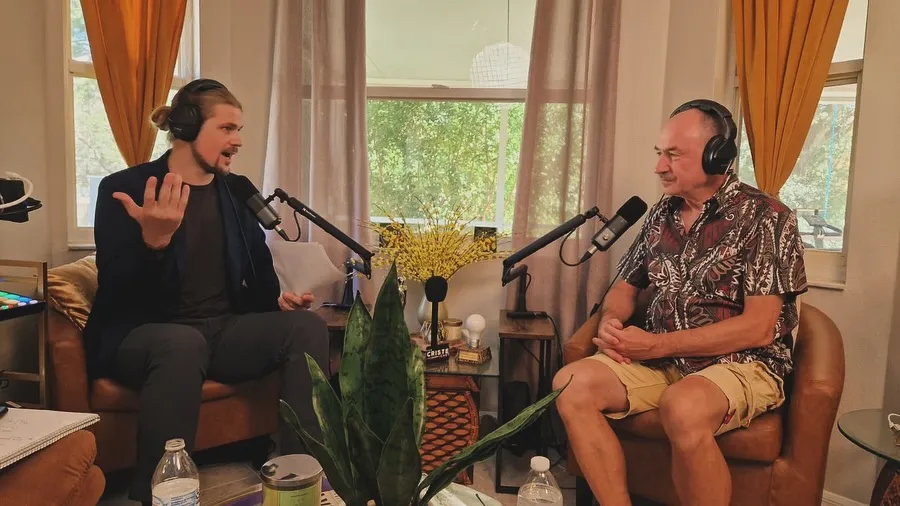
The "Hidden Cost" of Bad Audio
You might be thinking: "But my phone mic is free. The AM25X costs money." Let's analyze the Cost of "Free":
- Audience Churn: If 30% of viewers swipe away in the first 3 seconds because the audio is annoying, the algorithm penalizes your video. You lose growth.
- Brand Perception: Bad audio signals "Amateur." Brands are less likely to sponsor creators who don't have polished production value.
- Editing Time: How many hours have you wasted in CapCut or Premiere Pro trying to use "Denoise" plugins to fix a bad phone recording? Time is money.
The AM25X Investment: By buying a dedicated mic, you are buying Consistency. You plug it in, and you know it will sound good every time. You save hours of editing and gain instant credibility with your audience.
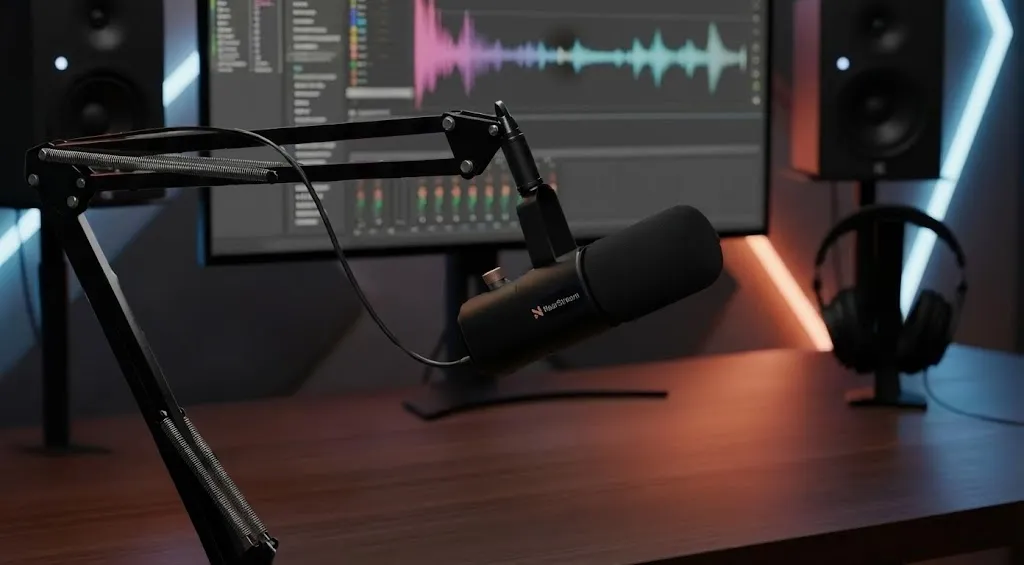
How to Connect AM25X to Your Phone (It’s Easier Than You Think)
A common misconception is that USB mics only work on computers. The AM25X is fully mobile-compatible.
For USB-C Phones (iPhone 15/16, Android, Google Pixel):
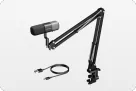
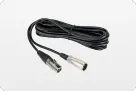
- Use the included USB-C to USB-C cable.
- Plug one end into the AM25X, the other into your phone.
- Done. The phone powers the mic. Open your Camera app or Voice Recorder, and it will switch to the external mic automatically.
For Lightning iPhones (iPhone 14 and older):
- You need a "Lightning to USB Camera Adapter" (OTG adapter).
- Plug the USB cable into the adapter, and the Lightning end into your phone.
- Pro Tip: Since iPhones have smaller batteries, ensure your phone is charged, as the microphone draws a small amount of power from the device.
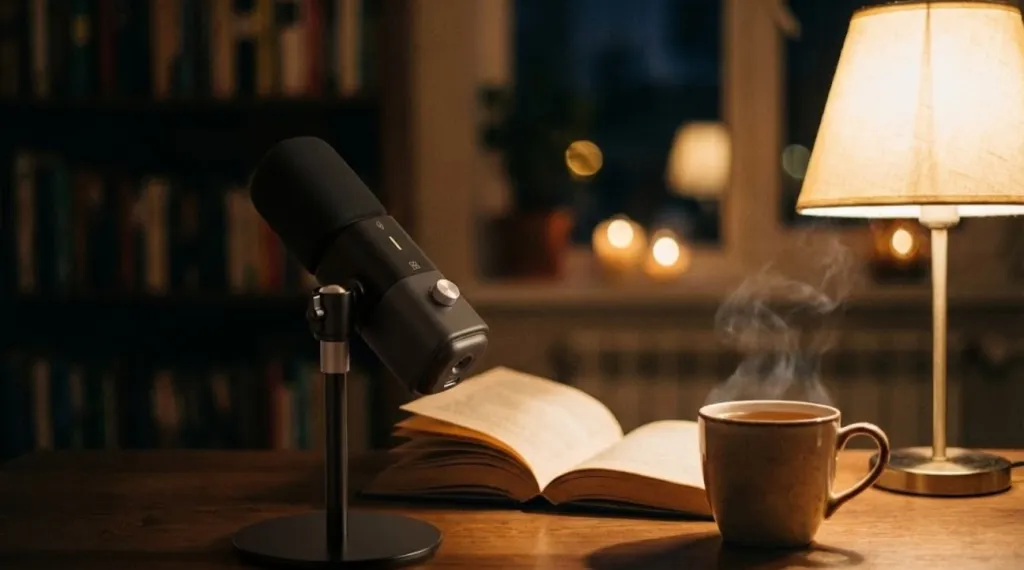
Conclusion: The Missing Piece of the Puzzle
We have reached a point where smartphone video is good enough for Netflix documentaries. But smartphone audio hasn't evolved much since the iPhone 4.
If you are creating content in 2026, Audio is 50% of the experience. You can forgive a slightly blurry video if the story is good. But you cannot forgive painful, echoey, or distorted audio.
The NearStream AM25X is the bridge. It combines the portability you love about mobile content creation with the fidelity required for professional broadcasting.
- It eliminates the "bathroom echo."
- It brings back the warmth of your voice.
- It handles the noise of the real world so you don't have to.
Don't let a $0.50 component in your $1,000 phone hold you back. Upgrade your input, and watch your content quality soar.
Frequently Asked Questions (FAQ)
Q: Will the AM25X drain my phone battery quickly? A: The AM25X is very power-efficient, but it does draw power from your phone to run the condenser capsule and LEDs. On a typical modern phone, you can record for hours without issue. For extremely long streams, we recommend using a wireless charging pad for your phone while the mic is plugged into the port.
Q: Do I need an app to use the AM25X on my phone? A: No app is required. The AM25X is "Class Compliant." Your phone’s operating system (iOS or Android) recognizes it as a generic external audio device. It works natively with the Camera app, TikTok, Instagram, Zoom, and Voice Memos.
Q: Is the AM25X too heavy to carry around for vlogging? A: The AM25X is built to be solid (metal construction), so it's heavier than a plastic lavalier mic. It is best used for "stationary" mobile content—like setting your phone on a tripod for a talking-head video, podcast, or stream. It is not designed to be handheld while walking like a selfie stick mic.
Q: Does it work with phone calls? A: Yes. If you plug it in, you can use it for WhatsApp calls, FaceTime, or standard phone calls. You will sound incredibly clear to the person on the other end—much better than speakerphone.
Q: What if my phone case is really thick? A: The USB-C cable included is standard, but some rugged cases (like Otterbox) have narrow charging port openings. Ensure your cable can fit fully into the port to establish a solid data connection.




 sales@nearstream.us