






















Creating content is a race against the algorithm. You spend hours recording a long gameplay video for your YouTube channel, but you also know that you need to be on TikTok and YouTube Shorts to grow. The problem? Recording the same game twice—once horizontally and once vertically—is exhausting and inefficient.
Smart creators have stopped doing the work twice. They use a "Hybrid Workflow." By recording high-quality source footage once, you can produce a detailed 20-minute reaction video for your main channel and five viral clips for Shorts. However, this requires specific gear to avoid blurry clips and audio lag. In this guide, we will show you how to set up the ultimate recording station using the NearStream capture card to dominate both platforms.
The Strategy: Why Hybrid "Reaction Videos" Are Winning
Before we touch the hardware, let's look at the math of content growth. Reaction videos are a staple of YouTube culture, but their discoverability is lower than Shorts.
- Long-form (16:9): Builds community and loyalty. This is where your true fans live.
- Short-form (9:16): Builds awareness and reach. This is where you find new fans.
The "Hybrid" Opportunity
Most creators fail because they try to crop their standard 1080p YouTube videos into Shorts. The result is a blurry, pixelated mess that users swipe past. To win, you need a workflow that captures Master Quality footage that looks pristine on a 65-inch TV and a 6-inch phone screen. This starts with understanding resolution.

The 4K Advantage: How to Record Gameplay for YouTube Shorts
This is the most technical—and most important—section of this guide. If you want to know how to record gameplay for youtube shorts that look professional, you must understand the "Crop Factor."
The 1080p Trap
Standard capture cards record at 1920x1080.
- If you take a 1080p video and crop the center vertical slice for TikTok (9:16 aspect ratio), you are left with a resolution of roughly 608x1080.
- When you stretch that back up to fill a phone screen, the pixels blur. The text becomes unreadable, and the gameplay looks muddy.
The 4K Solution
This is why top-tier creators switch to 4K.
- 4K Resolution: 3840x2160 pixels.
- The Math: If you crop a vertical slice from a 4K recording, the resulting resolution is 1080x1920.
- The Result: You have a Native Full HD vertical video without upscaling. Your Short looks just as sharp as a video shot natively on a phone.
Visual Comparison: Cropping 1080p vs. 4K Source
| Feature | Standard 1080p Capture | NearStream 4K Capture |
|---|---|---|
| Source Resolution | 1920 x 1080 | 3840 x 2160 |
| Vertical Crop Resolution | ~600 x 1080 (Low Res) | 1080 x 1920 (Full HD) |
| Image Quality on Phone | Blurry, pixelated edges | Sharp, crisp text |
| Flexibility | Limited zooming | Zoom in 200% without loss |
The Gear: Why NearStream is the Best Capture Card for Hybrids
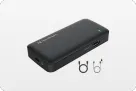
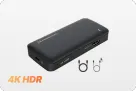
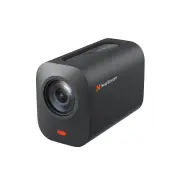
To execute this strategy, you need hardware that can handle high-bandwidth data. A cheap $20 USB dongle cannot process 4K data in real-time. This is where the best capture card for the job—NearStream—comes in.
Requirement 1: 4K30 or 4K60 Recording
Many capture cards advertise "4K Pass-through" but only "1080p Recording." This is marketing trickery.
- NearStream: Offers true 4K Recording. This ensures your "Master File" has all the pixels you need for editing later.
Requirement 2: Color Accuracy (4:4:4 / 4:2:2)
Reaction videos rely heavily on your facial expressions. If your capture card compresses colors (using 4:2:0 subsampling), your skin tone will look washed out or "blocky" when you crop in tight on your face.
- NearStream: Supports high-quality color formats (YUY2/NV12), ensuring your reaction cam looks DSLR-quality, even after editing.
Requirement 3: Zero-Lag Pass-through
You cannot react authentically if there is a delay on your screen. NearStream’s HDMI loop-out ensures you play the game in real-time while the computer records in the background.
The Workflow: Avoiding Audio and Video Out of Sync
Nothing ruins a viral clip faster than "Audio Drift"—where your scream happens 2 seconds before the jumpscare. This is a common plague in reaction videos.
Why Sync Issues Happen?
When you use software (like Display Capture) to record gameplay, your CPU has to run the game and encode the video. When the action gets intense, the CPU prioritizes the game, causing the recording to drop frames. The result? Audio and video out of sync.
The NearStream Hardware Fix
By offloading the video ingestion to an external USB 3.1 device, you stabilize the pipeline.
- Console/PC sends HDMI to NearStream.
- NearStream handles the signal processing.
- OBS receives a locked frame-rate signal.
Step-by-Step OBS Configuration
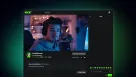
Here is how to set up your "Dual Canvas" in OBS for the perfect recording:
- Base Canvas: Set to 3840x2160 (4K). Even if you stream to Twitch in 1080p, record your canvas in 4K.
- Add Sources:
- Source A (Game): Add "Video Capture Device" -> Select NearStream Capture Card.
- Source B (Face): Add your webcam/camera.
- The "Safe Zone": Position your Facecam in the middle of the screen (or keep it as a separate layer).
- Pro Tip: Don't burn your facecam into the corner! Keep it movable so you can reposition it for the vertical crop later.

The Edit: Creating Viral Shorts from Long Footage
You have finished your recording. You now have a massive 4K file. Here is the workflow to turn it into content gold.
Step 1: The YouTube Long-Form Edit
Import the 4K footage into your editor (Premiere Pro / DaVinci Resolve).
- Create a 1920x1080 Sequence.
- Scale down your 4K footage to 50%. It will fit perfectly.
- Edit your full reaction video as normal.
Step 2: The Vertical Shorts Edit
Create a 1080x1920 Sequence (Vertical).
- Copy your edited timeline from Step 1.
- The Magic Moment: Instead of scaling down, keep the footage at 100% scale.
- Move the gameplay to the bottom half.
- Move your facecam to the top half.
- Because you recorded with the NearStream capture card in 4K, both halves are perfectly sharp 1080p. No upscaling required.

Conclusion
In the fast-paced world of social media, efficiency is the key to survival. Stop thinking of YouTube and TikTok as separate jobs. By upgrading your workflow with a 4K-capable device like the NearStream capture card, you unlock the ability to "film once, post everywhere."
You gain the flexibility to crop, zoom, and repurpose your content without sacrificing quality. Your Shorts will look sharper, your reactions will be perfectly synced, and you will have double the time to focus on what matters most: playing the games you love.
FAQ: Frequently Asked Questions
Q1: Do I need a 4K monitor to record in 4K with NearStream?
A: No! This is a common misconception. You can play on a 1080p monitor or TV. You simply tell the capture card (and OBS) to accept the 4K signal from the console (like PS5 or Xbox Series X). If you are recording a PC, you can use "Virtual Super Resolution" (NVIDIA DSR) to emulate 4K for the recording.
Q2: Will recording in 4K slow down my computer?
A: It requires more storage space and a decent GPU (NVENC encoder recommended). However, using the NearStream capture card puts less strain on your CPU than trying to run "Display Capture" software at 4K.
Q3: Can I use this setup for live streaming to TikTok and Twitch at the same time?
A: Yes. This is called "Simulcasting." With the NearStream card feeding a clean 4K signal into OBS, you can use the Aitum Vertical Plugin to send a 1080p stream to Twitch and a cropped vertical stream to TikTok simultaneously.
Q4: My audio is still out of sync in OBS. What do I do?
A: First, ensure you are using the NearStream card via a USB 3.0/3.1 port (Blue/Red), not a USB 2.0 port. Second, in OBS Audio Mixer, click the Gear Icon > Advanced Audio Properties, and check if any "Sync Offset" was accidentally added. With NearStream, this should usually be set to 0ms.
Q5: Is this setup worth it if I only have a Nintendo Switch (1080p)?
A: Yes, for two reasons. First, NearStream's 4K capabilities allow for better color upsampling (chroma subsampling). Second, you are future-proofing your setup for the "Switch 2" or when you upgrade to a PS5/PC.




 sales@nearstream.us