




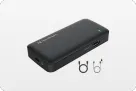
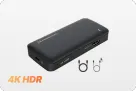















You bought a "4K Capture Card," plugged it in, and hit record. But instead of smooth, crisp gameplay, you got stuttering video and dropped frames. Why?
The culprit isn't your PC or your console—it's likely the cable.
In the world of 4K content creation, Bandwidth is King. Many capture cards claim to support 4K, but they rely on the older USB 3.0 standard, which acts like a bottleneck for high-resolution data. To capture True 4K at 60fps without compromise, you need the speed of USB 3.1. Here is why.
USB 3.0 vs 3.1: Understanding the Speed Limit
To understand why your streams might be lagging, we first need to navigate the confusing naming conventions of USB technology. Not all blue USB ports are created equal.
The Highway Analogy
Imagine video data as cars on a highway.
- USB 2.0 (480 Mbps): A dirt road. Only capable of low-quality 720p or compressed 1080p.
- USB 3.0 / 3.1 Gen 1 (5 Gbps): A standard 2-lane highway. Good for 1080p 60fps, but gets jammed during "rush hour" (4K video).
- USB 3.1 / 3.2 Gen 2 (10 Gbps): A massive 4-lane superhighway. This is the standard used by the NearStream CCD30. It has double the bandwidth of USB 3.0, allowing massive amounts of 4K data to flow freely without stopping.
The Naming Mess Explained
The USB Implementers Forum (USB-IF) has renamed these standards multiple times, causing confusion. Here is the definitive chart to check your equipment:
Table 1: USB Standards & Speeds
| Marketing Name | Technical Name | Speed (Bandwidth) | Max Resolution Capability |
|---|---|---|---|
| USB 3.0 | USB 3.2 Gen 1x1 | 5 Gbps | 1080p 60fps (Uncompressed) / 4K 30fps |
| USB 3.1 | USB 3.2 Gen 2x1 | 10 Gbps | 4K 60fps (MJPG/NV12) |
| USB 3.2 | USB 3.2 Gen 2x2 | 20 Gbps | 4K 144fps+ |
The Reality Check: Most "Budget" 4K capture cards on Amazon are stuck on 5 Gbps (USB 3.0). They physically cannot transfer uncompressed 4K 60fps data because the pipe is too small.
The Data Crunch: Why a 4K Capture Card Needs 10Gbps
Let’s do the math. Why exactly does a 4k capture card fail on USB 3.0?
A raw, uncompressed 4K video signal (3840 x 2160 pixels) at 60 frames per second contains a staggering amount of data.
- Pixel Count: 8,294,400 pixels per frame.
- Data Rate: Approx. 12 Gbps for raw uncompressed video (8-bit color).
The Bottleneck:
Since USB 3.0 caps out at 5 Gbps, it physically cannot fit 12 Gbps of data. To make it fit, the capture card has to aggressively compress the video or drop the frame rate to 30fps. This results in:
- Motion Artifacts: Fast-moving scenes (like in Call of Duty) look blocky.
- Input Lag: The compression process takes time, adding latency.
The USB 3.1 Advantage:
With 10 Gbps bandwidth, a premium device like the NearStream CCD30 has enough headroom to transfer high-quality 4K 60fps signals using efficient formats like MJPG without visible quality loss. It bridges the gap between the HDMI source and your PC's storage.
HDR10 Support: The Hidden Bandwidth Hog
The challenge gets even bigger when you turn on HDR (High Dynamic Range) on your PS5 or Xbox Series X.
HDR10 doesn't just make colors brighter; it increases the Bit Depth of the video signal from 8-bit to 10-bit.
- 8-bit Color: 16 million colors.
- 10-bit Color (HDR): 1 billion colors.
This extra color data requires significantly more bandwidth.
If you use a USB 3.0 card, enabling HDR often forces the card to switch to a lower chroma subsampling format (like 4:2:0) or drop the resolution to 1080p. This is why many streamers complain that their "HDR" recordings look washed out or grey—the capture card is choking on the data.
True HDR Support:
The NearStream CCD30 supports True HDR10, allowing you to capture the full dynamic range of your games. Thanks to the USB 3.1 interface, it can handle the extra metadata required for HDR without crushing the blacks or blowing out the highlights.
Choosing the Best Capture Card: NearStream CCD30
When looking for the best capture card in 2026, you need to look beyond the "4K" sticker on the box. You need to look at the Interface and the Supported Formats.
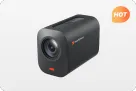
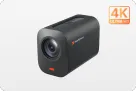
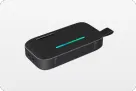
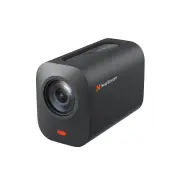
The NearStream CCD30 is engineered specifically to solve the bandwidth limitations of older devices.
Key Technical Specs of CCD30:
- Interface: USB-C 3.1 (Gen 2). This is the 10Gbps pipeline we discussed.
- Recording Resolution: 4K @ 60fps. Not just "Passthrough," but actual recording.
- Video Formats:
- MJPG: Supports 4K @ 60fps. Best for high-motion gameplay with minimal CPU load.
- NV12: Supports 1440p @ 60fps. Excellent color accuracy.
- YUY2: Supports 1440p @ 50fps. Uncompressed, studio-grade color.
- Zero-Lag Loop Out: While your PC records via USB 3.1, your TV gets a pristine HDMI 2.0 signal with zero latency.

Table 2: NearStream CCD30 vs. Generic USB 3.0 Cards
| Feature | Generic "4K" Card (USB 3.0) | NearStream CCD30 (USB 3.1) |
|---|---|---|
| Max Bandwidth | 5 Gbps | 10 Gbps (2x Faster) |
| 4K Recording | 4K @ 30fps (often fake/upscaled) | True 4K @ 60fps |
| Latency | Medium (60-100ms) | Ultra-Low (\<50ms) |
| HDR Recording | Often converts to SDR (Washed out) | True HDR10 Support |
| Audio | HDMI Audio Only | 3.5mm Mic & Line In |
How to Ensure You Are Getting USB 3.1 Speeds
Buying a USB 3.1 capture card is only step one. You must ensure your computer setup isn't accidentally slowing it down. Here is a checklist to guarantee you are getting the full 10 Gbps.
1. Check Your Ports
Look at the USB ports on your motherboard or laptop.
- Black: USB 2.0 (Too slow).
- Blue: USB 3.0 / 3.1 Gen 1 (5Gbps - Might limit 4K60).
- Red / Teal / USB-C: Often USB 3.1 Gen 2 (10Gbps). Plug your NearStream card here.
2. Use the Right Cable
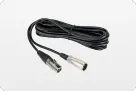
Not all USB-C cables are the same. Many charging cables are actually USB 2.0 data speeds. Always use the high-speed USB-C 3.1 cable provided in the NearStream box. Using a phone charging cable will instantly degrade your quality.
3. Avoid Hubs
Do not plug your capture card into a generic USB hub that has your mouse, keyboard, and webcam also plugged in. A hub shares bandwidth. Give the CCD30 its own dedicated port directly on the motherboard to ensure uninterrupted data flow.
Conclusion
In the race for visual fidelity, bandwidth is everything. The jump from 1080p to 4K60, combined with the rich colors of HDR10, requires a data pipeline that the aging USB 3.0 standard simply cannot provide effectively.
If you are serious about content creation and want to upload True 4K 60fps gameplay to YouTube, you cannot compromise on the connection. The NearStream CCD30 harnesses the power of USB 3.1, giving you the speed, clarity, and low latency required for next-generation gaming.
Don't let a slow cable bottleneck your PS5 or Xbox Series X. Upgrade to USB 3.1 and capture every pixel exactly as you see it.
FAQ: Frequently Asked Questions
Q1: Can I plug the NearStream CCD30 (USB 3.1) into a USB 3.0 port?
A: Yes, it is backward compatible. However, you will be limited to the speed of the USB 3.0 port (5 Gbps). This means you might not be able to record 4K at 60fps smoothly; you might need to lower the recording setting to 4K 30fps or 1080p 60fps. For full performance, a USB 3.1 (10Gbps) port is required.
Q2: What is the difference between MJPG and NV12?
A: These are video coding formats.
- NV12 is uncompressed (or lightly compressed) color. It looks fantastic but uses massive bandwidth.
- MJPG compresses each frame individually (like a series of JPEG photos).
The CCD30 uses MJPG to achieve 4K 60fps because it fits high-quality 4K motion into the USB bandwidth efficiently. It uses NV12 for slightly lower resolutions (like 1440p) where uncompressed data fits easier.
Q3: Do I need a high-end PC to record 4K60?
A: Yes. While the NearStream card handles the capture, your PC handles the encoding (saving the file). Recording 4K60 requires a decent graphics card (like an NVIDIA RTX 3060 or better) or a powerful CPU. If your PC is older, the CCD30 can still pass through 4K to your TV, but you might want to record in 1080p 60fps for stability.
Q4: Does this card work with Mac M1/M2/M3?
A: Absolutely. The CCD30 is Plug and Play (UVC standard) and requires no drivers. The USB-C interface is perfect for modern MacBooks. However, ensure you use a software like OBS for Mac to configure the resolution settings correctly.
Q5: Will enabling HDR10 make my stream look weird on Twitch?
A: Twitch does not currently support HDR. If you play in HDR10, the NearStream card can capture the HDR signal. In OBS, you should use a Tone Mapping filter (HDR to SDR) to ensure your Twitch viewers see correct colors, while you record a local HDR master file for YouTube.





 sales@nearstream.us