Rode Podcaster Bundle vs Nearstream PodKit: Which Fits?
Compare a two-person audio bundle with a configurable audio-video kit by workflow, expansion, and migration burden.
Podcast Gear
Podcast Workflow
Video Podcasting
Updated: Nov 1, 2026 · 8 minutes read
Modular Video Kits for Growing Business.
Choose the RØDE Podcaster Bundle for an established two-person audio workflow; choose a configurable Nearstream PodKit when camera angles, individual microphones, and a path from two to four speakers matter. The decisive issue is system scope, not a universal sound-quality winner.
Key Takeaways
Choose the RØDE bundle for two-person audio-only recording with integrated mixing, processing, headphones, arms, microphones, and cables.
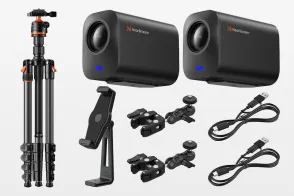
Choose Nearstream for a two-person video podcast that needs two cameras, two microphones, supports, and one AMIX40U.
For a four-person panel, Nearstream's documented two-mixer configuration fits the brief; the RØDE bundle includes only two microphones.
Do not migrate an established RØDE audio studio merely to add video if a camera-only addition would preserve a working recording chain.
Rode Podcaster Bundle vs Nearstream PodKit: The 10-Second Verdict
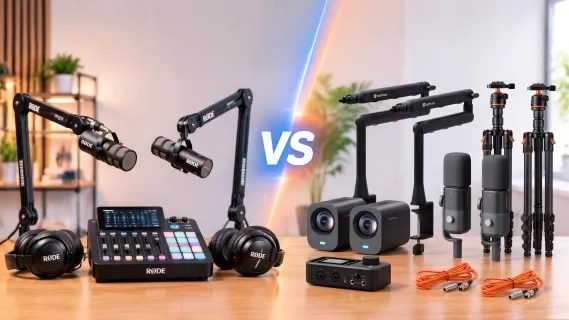
The Rode Podcaster Bundle vs Nearstream PodKit decision is RØDE for integrated two-person audio, Nearstream for an audio-video system that can be configured around participants and camera angles. Neither wins every production; the official contents and signal paths make the boundary clear.
Decision dimension
Nearstream
Competing option
Winner
System scope
Configurable microphones, cameras, mixer, supports, and optional studio pieces
Two-person audio production bundle
Nearstream for video; RØDE for audio-only completeness
Primary capture design
AM25X condenser, supercardioid, USB/XLR; optional VM20 Pro video
Two PodMic dynamic cardioid XLR microphones
RØDE for a supplied dynamic XLR pair; Nearstream for hybrid capture
Host connection and signal path
USB direct for one AM25X, or XLR into AMIX40U and computer
PodMic XLR into RØDECaster Duo
RØDE for integrated audio; Nearstream for direct-USB entry
Multi-person or multi-source expansion
Documented two-person and linked two-mixer four-person layouts
Bundle supplies two microphones and two combo inputs
Nearstream for four-person video; RØDE for its intended two-person scope
Monitoring and control workflow
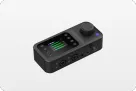
AM25X USB monitoring; AMIX40U controls, LCD, and two headphone outputs
RØDECaster Duo mixing, processing, recording, and effects
RØDE for integrated audio control
Recording and live-production path
Computer workflow, camera outputs, local VM20 Pro recording, optional Producer
RØDECaster Duo recording and live audio production
Nearstream for video; RØDE for self-contained audio production
Physical setup and included hardware
Scenario-dependent microphones, arms, tripods, and cabling
Two PSA1+ arms, two NTH-100 headphones, and XLR cables included
RØDE for a fixed audio package; Nearstream for a custom layout
Upgrade and recovery burden
More pieces to configure, but modular audio-video growth
Fewer video decisions, but cameras remain a separate purchase and integration
Nearstream for planned growth; RØDE for contained audio operation
The hidden truth is that “bundle” does not describe the same job in these two offers. RØDE bundles an audio production chain around the RØDECaster Duo. Nearstream configures a chain around the number of people and whether they must be seen. Comparing only microphone specifications would miss the actual purchase risk.
Who Should Choose Each Podcast Kit?
Choose the Rode Podcaster Bundle when two people record in one room, audio is the finished product, and you want the mixer, processing, recording path, microphones, headphones, arms, and cables selected as one package. It is also the stronger choice when an existing team already understands RØDECaster operation and does not want to redesign its audio routine.
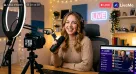
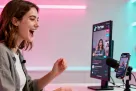
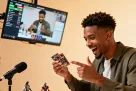
Choose Nearstream PodKit when video is part of the episode, when each participant needs a microphone and camera position, or when a solo USB start must become a two- or four-person production. Use the Nearstream podcasting solution to configure quantities instead of treating one product photograph as a universal kit.
Do not choose Nearstream if you only want the RØDE bundle's integrated audio workflow with fewer video-specific decisions. Do not choose RØDE if a two-camera, two-person video episode must work from the same plan without separately sourcing every video component.
A practical configuration rule
Start with the number of simultaneous speakers, then add one camera position per required view, then choose the recording and monitoring path. That order prevents a common failure: buying an attractive microphone bundle first and discovering later that the visual deliverable determines the rest of the system.
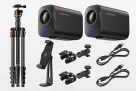
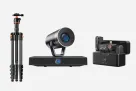
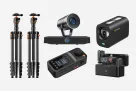
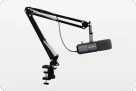
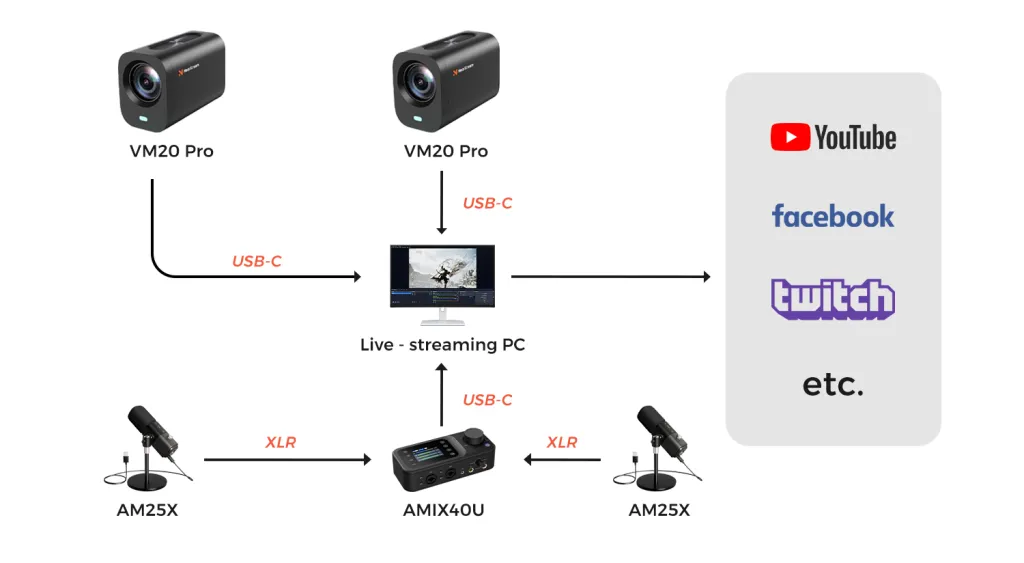
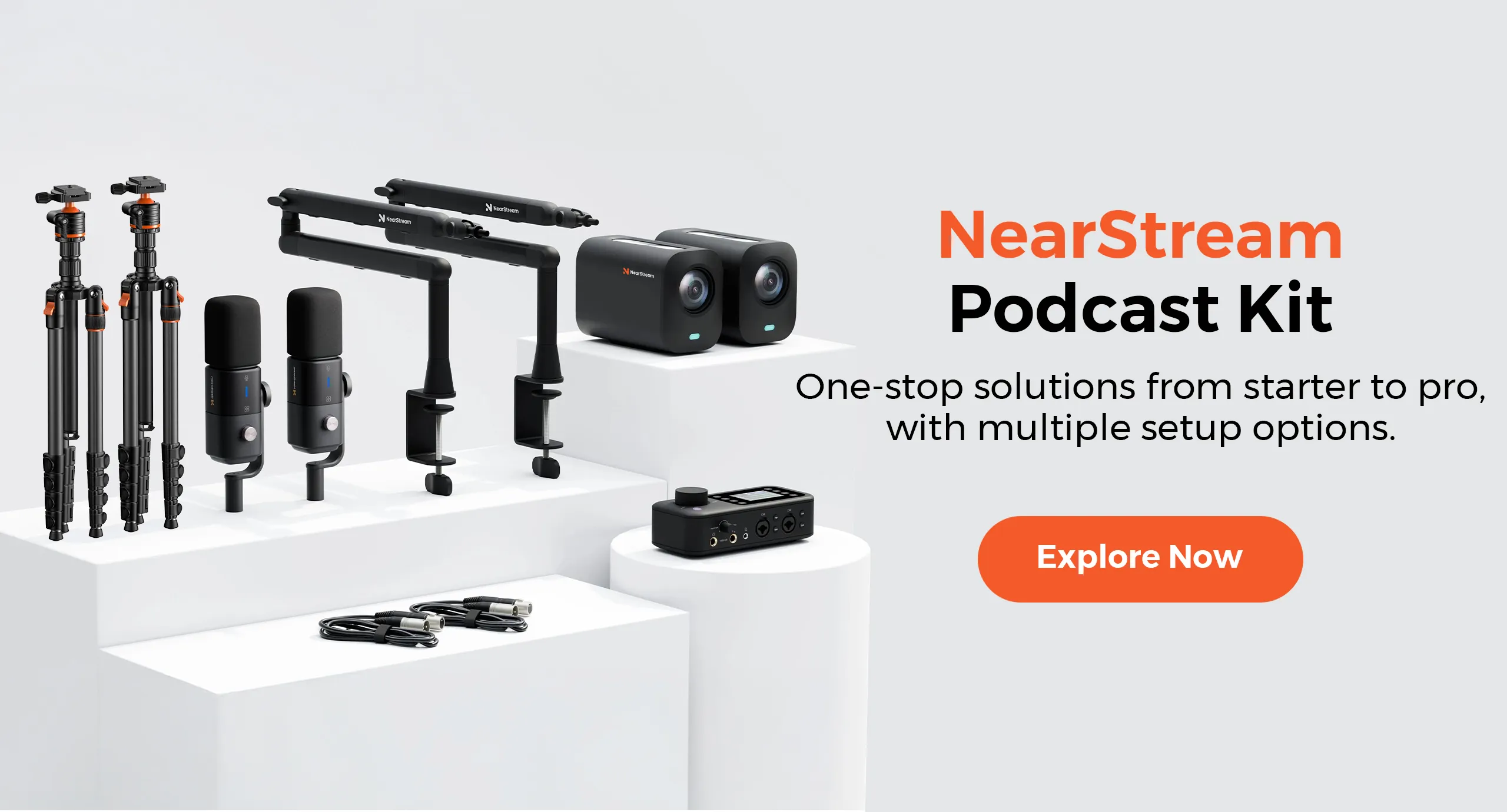
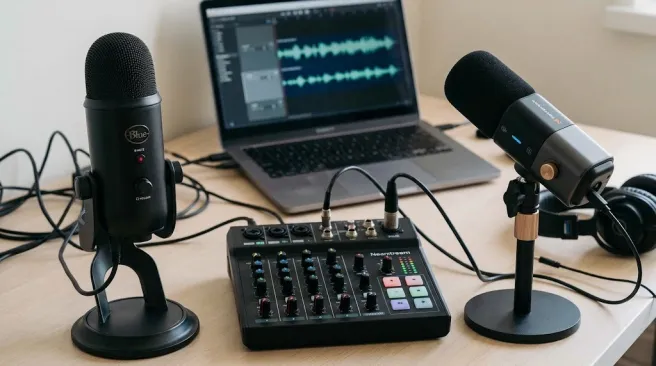
For a solo audio recording, one AM25X through USB is the lean Nearstream route. For two people on camera, the official solution shows two AM25X microphones, two VM20 Pro cameras, two ST20 arms, two ST30 tripods, one AMIX40U, and XLR cabling. For four people, the official layout doubles the mixer count and links the two units; it does not pretend that a two-input mixer is a four-microphone interface.
Scenario Winners: Six Podcast Workflows
The winner changes with the deliverable, not with brand loyalty. Each row below commits to a choice and ties that choice to official contents or connections plus a practical consequence.
Scenario
Winner
Evidence chain and practical reason
Solo desk recording with fast setup
Nearstream
One AM25X connects directly by USB, supplies 48 kHz/24-bit USB audio, and includes a desk stand and USB cable. A two-person RØDE bundle adds a mixer and a second set of equipment that a solo desk does not need.
Two-person in-room interview
Nearstream for video
The documented Nearstream layout includes two microphones, two cameras, supports, and one AMIX40U. It directly covers a two-person video episode; the RØDE package directly covers the audio portion only.
Four-person panel
Nearstream
Nearstream publishes a four-person configuration with four capture positions and two AMIX40U units linked by AUX. The RØDE bundle's two PodMics and two combo inputs do not provide four discrete bundled microphone positions.
Video-first multi-camera podcast
Nearstream
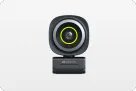
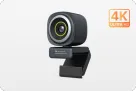
VM20 Pro cameras, ST30 supports, and the documented multi-camera solution are in scope. RØDE's official bundle contains no cameras, so a separate video design is unavoidable.
Established audio-only studio
RØDE
RØDECaster Duo handles mixing, processing, recording, and sounds or effects, and the package includes the two-person audio accessories. Replacing that chain with a modular video kit creates work without improving the stated audio-only deliverable.
Frequent relocation or live-event production
RØDE for audio-only events
The integrated RØDECaster audio path and fixed two-person accessory list reduce the number of video components to transport. Choose this winner specifically for audio-only events; a video event reverses the system-scope decision.
Solo desk recording: remove devices before chasing specifications
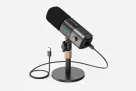
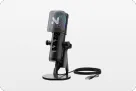
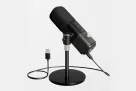
A solo host needs a reliable voice path, monitoring, and a repeatable record button—not a second microphone, second arm, and second headphone set. The AM25X's USB path addresses that narrower job. Its official package includes the microphone, windscreen, desk stand, and USB cable, so the basic desktop signal path does not require an external mixer.
The practical trade-off is room and feature behavior. AM25X is a supercardioid condenser, not a dynamic cardioid PodMic. Its built-in AI noise suppression and function controls belong to USB mode; XLR mode is the pure audio path without those USB features. Therefore, “start with USB” is not merely a connector choice. It determines which controls are available.
Use a raw-room test before relying on processing: record speech, a silent pause, keyboard clicks, and the fan noise that will exist during a real session. If the recording only works after heavy correction, reposition the microphone or address the room. Noise suppression is not a substitute for a sensible capture position.
Two-person interview: decide whether “two-person” means two voices or two views
For an audio-only interview, RØDE is the cleaner fixed package. Two PodMics, two PSA1+ arms, two NTH-100 headphones, two XLR cables, and RØDECaster Duo form the official two-person chain. Each host has a defined microphone and monitoring accessory, while the Duo supplies the central production device.
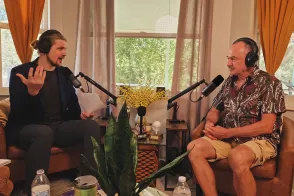
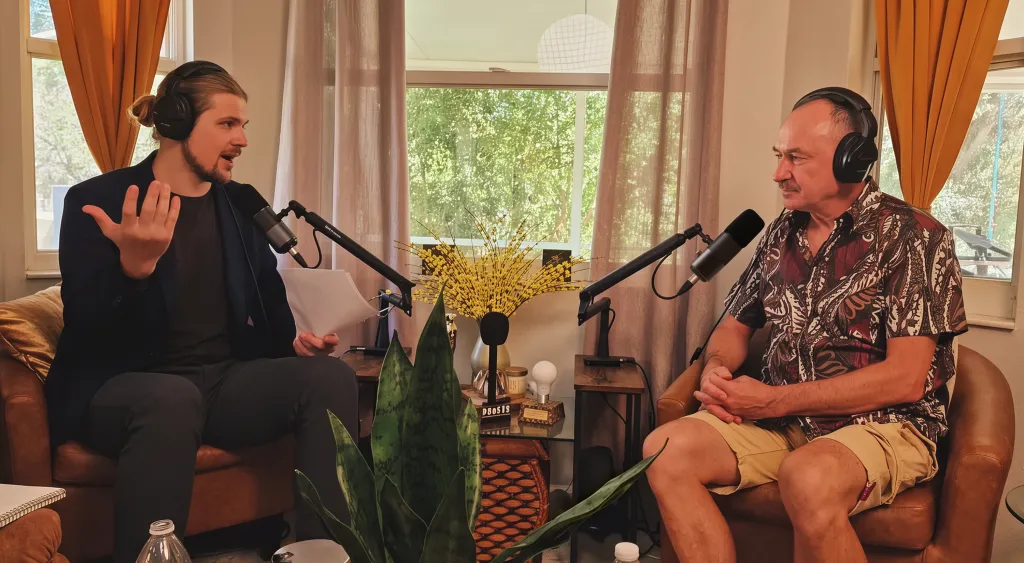
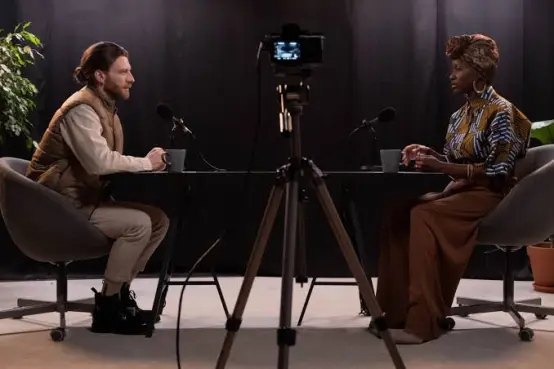
For a video interview, Nearstream wins because the two-person diagram assigns two cameras as well as two microphones. That design avoids treating video as an afterthought. The host can plan camera support, microphone placement, mixer connections, and computer output together.
A non-obvious point is that adding cameras later can change audio placement. A microphone position that looks acceptable in a wide shot may not be the position chosen during an audio-only setup. Planning both together reduces the chance of rebuilding the desk after the first video test.
Four-person panel: count inputs and outputs, not the word “channel”
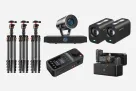
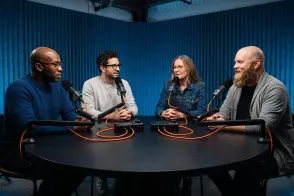
A four-person panel needs four deliberate voice positions if each speaker must have an individual microphone. Nearstream's official diagram uses two AMIX40U units linked through 3.5 mm AUX, with USB-C output to a computer. This is the recommended four-person Nearstream architecture because it follows the published signal path.
Do not infer four independent microphone inputs from AMIX40U's “10-channel” positioning. Its official hardware lists two XLR/6.35 mm combo inputs. The published two-mixer diagram, rather than the marketing channel label, governs this recommendation.
The RØDE bundle can be part of a larger RØDE ecosystem discussion, but this article compares what the named bundle supplies. It includes two PodMics and the Duo has two Neutrik combo inputs. Expanding beyond that requires additional equipment and a new plan; it is not a four-person bundle as shipped.
Video-first production: recovery paths matter as much as the live picture
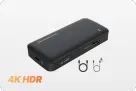
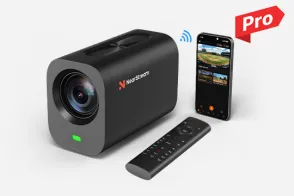
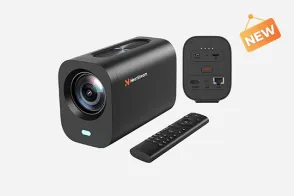
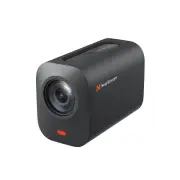
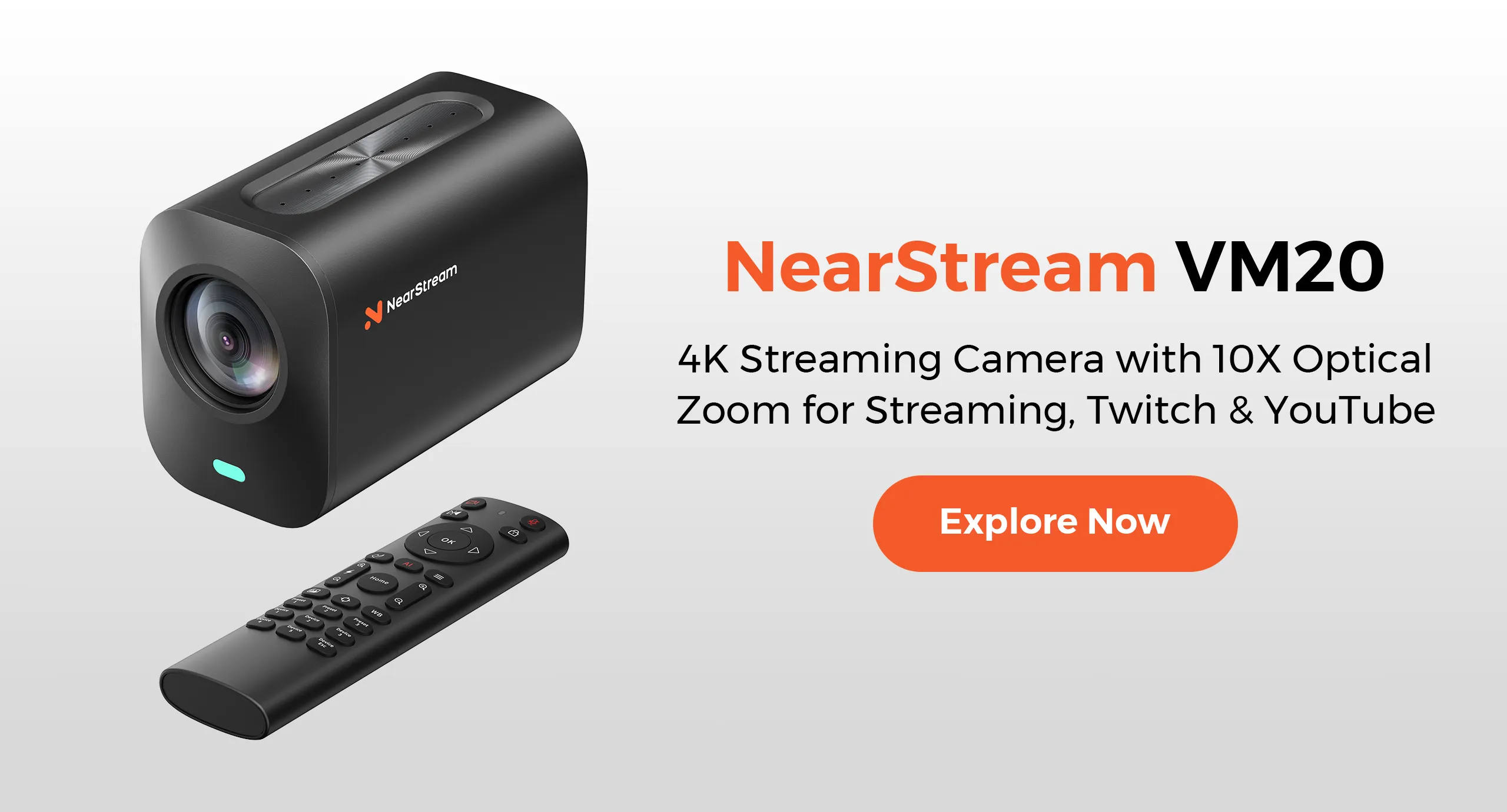
A live multi-camera podcast benefits from more than a preview image. VM20 Pro officially provides USB 3.0, HDMI 2.0, RJ45, MicroSD recording, and wireless AV paths. USB 3.0, RJ45, and SD recording support 4K30; HDMI and wireless AV support 1080p60. Those are alternative routes, not a promise that every path carries the same format.
Nearstream's optional Producer can be considered when the production brief calls for a dedicated live-production component. Do not add it automatically to a solo or basic two-person setup. Extra production control is useful only when someone will operate it and when the recording plan uses it.
RØDE remains relevant to the audio chain, but the named Podcaster Bundle does not solve camera switching, camera support, or local camera recording. For a video-first buyer, those omissions are not minor accessories; they are the rest of the system.
Established audio-only studio: preserve a working chain
An established RØDECaster studio has already paid its learning and configuration costs. Its operator knows where recording, processing, monitoring, and effects live. Moving to AMIX40U means learning different controls, checking levels again, and rebuilding a show routine. If video is the only missing piece, a camera addition can be less disruptive than replacing audio.
This is the clearest case where Nearstream should not win. A modular kit is valuable when the system is being designed or expanded, not automatically when an audio chain already satisfies the production brief.
The three-layer system test before choosing a bundle
The first layer asks whether the box contains every required role. For two-person audio, RØDE passes that test with its production device, microphones, arms, headphones, and cables. For two-person video, it fails because no camera role is included. Nearstream can pass either test only when the selected configuration actually contains the required audio and video roles.
The second layer asks whether the operator can run those roles together. A collection of compatible parts can still fail when one person must monitor two headphones, mix four voices, switch cameras, and watch a recording indicator at the same time. RØDE reduces audio-role fragmentation through the Duo. Nearstream keeps audio and camera roles modular, which is powerful but requires a written operating routine.
The third layer asks what happens when one route fails. RØDE's recording path serves audio recovery, but the video system needs its own backup plan. VM20 Pro's local MicroSD recording gives a Nearstream video design a separate recording point, provided the operator starts and verifies it. These layers explain why a longer equipment list can either reduce or increase risk: it reduces missing-role risk while adding configuration risk.
Configuration examples and their stopping conditions
For a solo audio show with occasional remote guests, begin with AM25X over USB and do not add VM20 Pro, AMIX40U, or Producer by default. Stop at that configuration when one voice, headphones, and computer recording satisfy the show. Add a mixer when a second local microphone or another required source appears, not before.
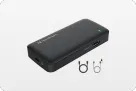
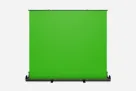
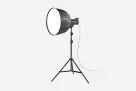
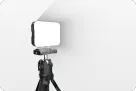
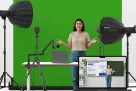
For a two-person video interview, use the documented two-camera, two-microphone layout with one AMIX40U. Add SL40 lighting only after testing the actual camera exposure and room light; add VK50 only when the production genuinely uses a green-screen background. These optional pieces solve visual problems, not input-count problems.
For a four-person panel, stop and redesign if the shopping list contains only one AMIX40U for four XLR microphones. The official two-mixer AUX-linked layout is the appropriate reference. Also stop if nobody is assigned to watch the combined recording, because four separate microphone tests do not verify the linked output.
For an existing RØDECaster audio show adding video, the stopping condition is different: if the audio chain works, do not replace it during the camera pilot. First prove that the new cameras, supports, and recording destinations serve the episode. A full Nearstream migration becomes rational only when the team intentionally wants one redesigned modular workflow.
Official Specifications and What They Change
The official specifications favor RØDE for integrated two-person audio and Nearstream for modular audio-video capture. Read each row as a workflow constraint; a longer feature list is not a verdict.
Official comparison dimension
Nearstream
RØDE Podcaster Bundle
Practical impact
System scope
Official podcasting diagrams combine AM25X, VM20 Pro, AMIX40U, ST20, ST30, and cabling, with optional studio equipment.
The official bundle lists RØDECaster Duo, two PodMics, two PSA1+ arms, two NTH-100 headphones, and two XLR cables.
Nearstream covers video planning directly; RØDE buyers must source video separately, while audio-only buyers receive a focused package.
Primary capture design
AM25X is a supercardioid condenser with USB and XLR modes; VM20 Pro adds 4K-positioned video and 10× optical zoom.
PodMic is an end-address dynamic cardioid microphone with XLR output, internal pop filter, internal shock mount, and integrated swing mount.
AM25X supports a direct-computer start and later mixer use; PodMic requires an external XLR chain but supplies a dedicated dynamic broadcast design.
Host connection and signal path
AM25X USB audio is 48 kHz/24-bit; XLR connects through the production chain. AMIX40U offers USB and OTG connections and requires external power.
PodMic connects by XLR to RØDECaster Duo; the Duo provides two Neutrik combo inputs and high-gain preamps.
A solo AM25X can bypass a mixer, while the RØDE route centers every microphone on the Duo and its power and host setup.
Multi-person or multi-source expansion
Two-person diagrams use one AMIX40U; four-person diagrams use two linked through 3.5 mm AUX. AMIX40U has two XLR/6.35 mm combo inputs.
The bundle supplies two microphones, and RØDECaster Duo has two combo inputs plus an integrated receiver for compatible RØDE Series IV transmitters.
Nearstream has a documented four-person wired layout; RØDE's fixed bundle targets two people and its wireless support depends on compatible transmitters.
Monitoring and control workflow
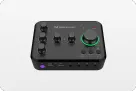
AM25X offers 3.5 mm headphone monitoring in USB mode. AMIX40U has two headphone outputs, a 2-inch LCD, 0–100 gain, sound modes, and reverb.
RØDECaster Duo handles mixing, APHEX processing, recording, and sounds or effects; NTH-100 headphones are included for two people.
RØDE centralizes production control and includes monitoring hardware; Nearstream separates microphone and mixer controls that must be checked per mode.
Recording and live-production path
VM20 Pro supports local MicroSD recording and multiple output paths; the kit can connect to a computer and optionally add Producer.
RØDECaster Duo is the audio recording and production center; no camera recording device is included in the bundle.
Nearstream can preserve camera-local recordings alongside the production plan; RØDE keeps audio production integrated but leaves video recording to another system.
Physical setup and included hardware
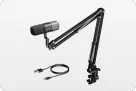
The documented two-person video kit includes two ST20 microphone arms, two ST30 camera tripods, microphones, cameras, mixer, and XLR cabling.
Two PSA1+ arms, two NTH-100 headphones, and two XLR cables accompany the microphones and Duo.
Nearstream requires more placement and cable decisions for video; RØDE supplies the expected two-person audio support and monitoring accessories.
Upgrade and recovery burden
USB and XLR modes allow staged expansion, while VM20 Pro offers several outputs with different stated formats.
The integrated audio chain has a fixed two-person scope, and camera upgrades sit outside the bundle.
Nearstream growth adds devices and checks; RØDE keeps audio contained but a later video upgrade becomes a separate integration project.
Why the specifications do not produce a universal sound winner
The compared microphone designs differ, and the RØDE package also includes a production console. Without a controlled listening test using the same voices, room, placement, gain, and processing, it would be dishonest to declare one universally better sounding. This comparison therefore assigns winners by verified workflow fit.
That restraint improves the buying decision. A host can fix an inconvenient connection path with planning, but cannot infer room behavior from a frequency-response number. Likewise, a mixer's processing name does not tell you whether its settings will match your current show. Preserve time for a pilot recording whichever route you choose.
Switching Costs and Migration Risks
Switching from the Rode Podcaster Bundle to Nearstream is a system migration, not a microphone swap. Budget setup time and compatibility checks before a real guest is booked.
Rebuild the control map. RØDECaster Duo mixing, APHEX processing, recording, and effects settings do not become AMIX40U presets. Document current gain, processing intent, monitor routing, and recording levels, then recreate the result by listening and metering rather than copying numbers blindly.
Recheck cables and power. AMIX40U requires external power and offers XLR/6.35 mm combo inputs, USB, OTG, AUX, and dual stereo outputs. Plan power placement, host cabling, and any AUX link between two mixers. Do not assume an existing cable layout reaches the new device positions.
Separate USB-mode behavior from XLR behavior. AM25X noise suppression and function controls are available in USB mode; XLR mode removes those USB features. A soundcheck performed over USB is not proof of the later XLR chain.
Replace monitoring habits. The RØDE package includes two NTH-100 headphones and central Duo control. Nearstream supplies two AMIX40U headphone outputs, but monitoring still needs a per-person level check and an agreed cue routine.
Account for wireless ecosystem changes. RØDECaster Duo integrates a receiver for compatible RØDE Series IV transmitters. Do not assume that integration transfers to a different mixer; verify the complete wireless path before retiring the Duo.
Add camera recovery procedures. VM20 Pro's SD, USB, network, HDMI, and wireless paths have different stated capabilities. Label every cable, record the chosen format per path, and test a local recording before relying on it as backup.
Schedule a rehearsal and a rollback. Keep the RØDE chain operational until Nearstream records a complete rehearsal with the actual number of speakers. A five-minute tone test will not expose a missing camera feed, an AUX routing mistake, or a monitoring problem that appears during a full episode.
The least risky migration is staged: prove one microphone path, then two-person audio, then cameras, and only then retire the old recording chain. A four-person linked-mixer setup deserves its own full-length rehearsal because it adds another routing and gain-stage boundary.
Frequently Asked Questions
Is the RØDE Podcaster Bundle a video podcast kit?
No. RØDE's official bundle lists audio production equipment, microphones, arms, headphones, and XLR cables, but no cameras, tripods, lighting, or green screen. Add video equipment separately if the podcast needs camera angles.
Can Nearstream support a four-person podcast?
Yes. Nearstream's official four-person diagrams show four microphones and cameras, four supports, and two AMIX40U mixers linked through 3.5 mm AUX before USB-C output to a computer. Configure for that participant count rather than buying a two-person layout unchanged.
Can I begin with one AM25X and expand later?
Yes. The AM25X can start through USB and later join a mixer through XLR. Expansion still requires the appropriate mixer inputs, XLR cabling, mounting hardware, and a fresh gain and monitoring check.
Should an existing RØDECaster studio switch to Nearstream?
Not for audio alone. Keep the working RØDECaster chain if its inputs, processing, recording, and wireless workflow already meet the brief. Add cameras separately, or choose Nearstream when replacing the whole audio-video workflow is an explicit goal.
The final rule is simple: buy RØDE when the episode ends as audio and its integrated two-person workflow is the goal; configure Nearstream when the episode must be seen as well as heard. Make that decision before comparing individual components, and the rest of the kit becomes much easier to specify.











 sales@nearstream.us