Compare SM7B and AM25X by gain demands, close-talk technique, USB/XLR paths, expansion, and migration work.
Podcast Microphones
Podcast Gear
Podcast Workflow
Updated: Nov 1, 2026 · 8 minutes read
Modular Video Kits for Growing Business.
For creators without a high-gain XLR chain, Nearstream AM25X is the more practical SM7B alternative because USB enables direct recording and XLR preserves later expansion. Keep the SM7B for an established close-talk studio that already supplies suitable gain, mounting, monitoring, and a deliberate external processing chain.
Key Takeaways
Choose AM25X over SM7B for a laptop-first solo setup that needs USB audio and monitoring without an external XLR interface.
Shure recommends an inline booster or stronger preamp when the SM7B preamp cannot provide more than 60 dB of gain.
AM25X's USB noise suppression and controls do not carry into XLR mode, so the final connection path must be rehearsed.
Retain SM7B for a stable one-to-six-inch close-talk workflow with a proven high-gain chain rather than migrating for unused USB flexibility.
Shure SM7B Alternatives: The 10-Second Verdict
Among Shure SM7B alternatives, choose Nearstream AM25X when direct USB, USB-mode monitoring, and a later XLR path solve more important problems than capsule continuity. Keep SM7B when its dynamic moving-coil design and an already validated high-gain studio chain are the requirements.
Decision dimension
Nearstream
Competing option
Winner
System scope
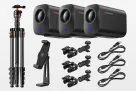
AM25X standalone or a configurable microphone, mixer, camera, and support kit
SM7B microphone within a separately built XLR chain
Nearstream for a complete audio-video build
Primary capture design
Supercardioid condenser; stated maximum pickup distance of 15.7 inches/40 cm
Dynamic moving-coil cardioid; recommended direct close talk from 1–6 inches
SM7B for established close talk; AM25X for hybrid use
Host connection and signal path
Direct USB at 48 kHz/24-bit or XLR into external equipment
XLR through a preamp with substantial gain; booster recommended when gain is insufficient
AM25X for a simple laptop start
Multi-person or multi-source expansion
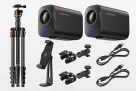
Documented two-person one-mixer and four-person two-mixer configurations
One external XLR input and suitable gain chain per microphone position
Nearstream for documented four-person video expansion
Monitoring and control workflow
USB-mode 3.5 mm headphone monitoring and microphone controls; AMIX40U in expanded kits
Monitoring and processing supplied by the external preamp, interface, or console
AM25X for standalone monitoring
Recording and live-production path
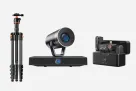
Computer recording, optional AMIX40U, VM20 Pro cameras, and Producer
External XLR recorder, interface, or production console
Nearstream for integrated video growth
Physical setup and included hardware
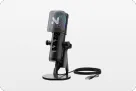
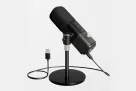
Windscreen, desk stand, and USB cable included; XLR cable not included standalone
Standard and A7WS close-talk windscreens; 0.764 kg microphone requiring suitable support
AM25X for a basic USB desk; SM7B for an established mounted chain
Upgrade and recovery burden
USB-to-XLR continuity, with feature and monitoring changes to retest
Stable external-chain modularity, but gain and hardware dependencies remain
AM25X for staged connection growth
The phrase “pro sound for less” should mean less avoidable chain complexity, not an invented price claim. AM25X can remove a separate XLR preamp from the first computer recording. It does not follow that every SM7B owner should replace a working microphone, or that a condenser will automatically sound better in every room.
Who Should Choose AM25X or Keep SM7B?
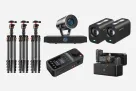
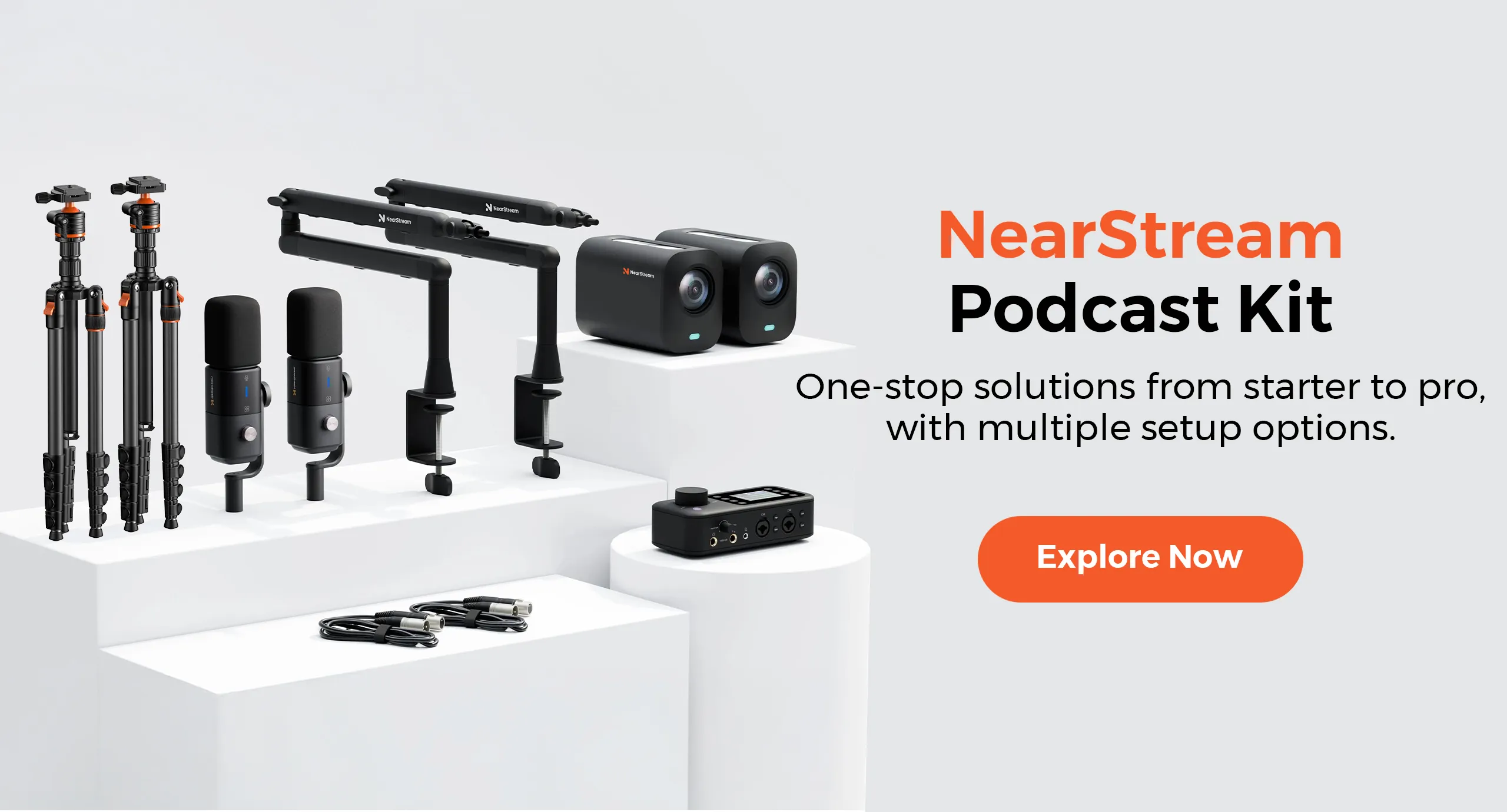
Choose Nearstream AM25X if your current problem is a missing interface, insufficient preamp gain, or a desire to begin over USB without giving up future XLR expansion. It is the practical best SM7B alternative when the purchase includes a path toward two-person or four-person audio-video production through the configurable Nearstream podcast kit.
Keep Shure SM7B if your studio already provides appropriate gain, reliable monitoring, and a close-talk position that works for the host. Shure's official guide recommends speaking directly into the microphone from 1–6 inches away and includes both a standard windscreen and the larger A7WS windscreen for close-talk applications.
Do not choose AM25X because a specification appears larger on paper. Do not keep SM7B because of reputation alone when the actual interface cannot deliver a usable recording without excessive gain. Make the decision at the signal-chain level.
The first-principles gain test
A microphone, preamp, and recording level form one chain. Shure states that SM7B sensitivity requires more gain than many entry- or mid-level preamps provide. If the preamp cannot provide more than 60 dB of gain, Shure recommends an inline booster or stronger preamp.
That official guidance produces a useful branch. If your existing chain already supplies enough clean level and you like the operating routine, SM7B remains viable. If you are buying the entire chain from scratch for a solo computer podcast, AM25X USB avoids making that external gain problem the first obstacle.
The hidden truth is that a booster can repair a gain shortage but cannot simplify the rest of the production. Mounting, monitoring, cabling, and repeatable technique still determine whether the chain works every week.
Scenario Winners: Six Podcast Workflows
AM25X wins the new-build and video scenarios because direct USB and published multi-person configurations address the stated constraints. SM7B wins the established audio-only studio because its gain, mounting, and close-talk technique have already been solved there.
Scenario
Winner
Evidence chain and practical reason
Solo desk recording with fast setup
AM25X
USB audio and USB-mode headphone monitoring allow a direct computer chain, with desk stand and USB cable included. SM7B needs an external XLR chain with suitable gain.
Two-person in-room interview
AM25X kit
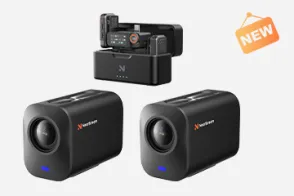
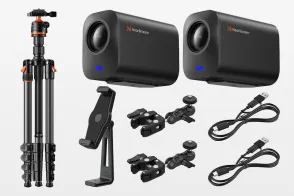
Two microphones and one AMIX40U follow Nearstream's documented two-person layout, with two combo inputs and two headphone outputs. Cameras can be included in the same configuration.
Four-person panel
AM25X kit
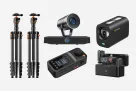
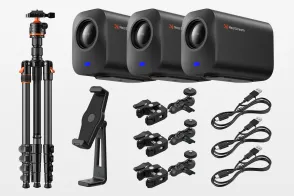
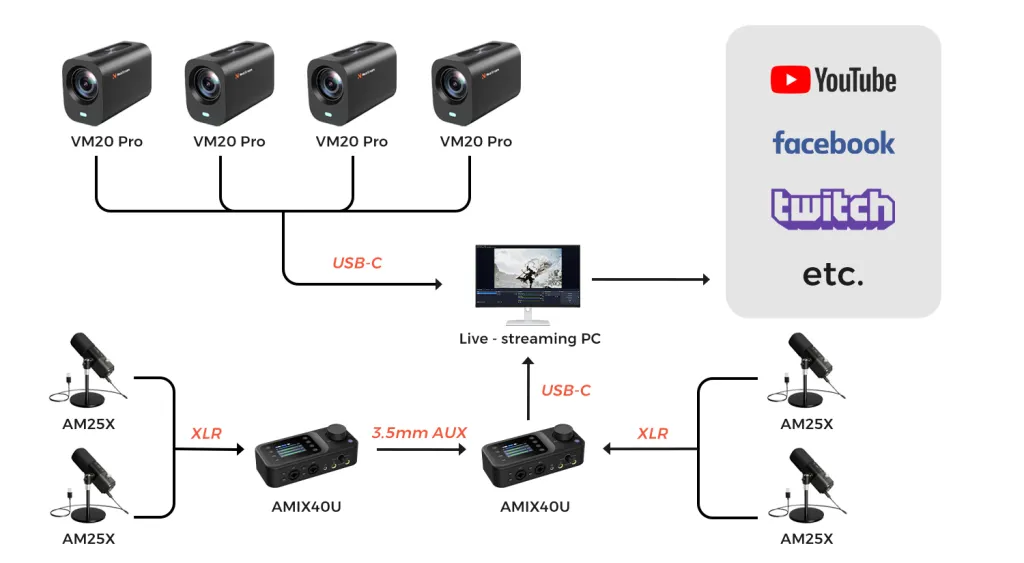
Nearstream's published four-person design uses four microphones and two AMIX40U units linked through AUX. A single two-input mixer is not presented as enough for four XLR microphones.
Video-first multi-camera podcast
AM25X kit
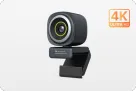
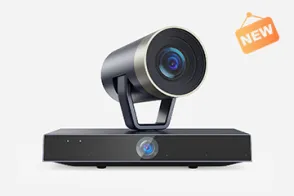
AM25X can be combined with VM20 Pro cameras and supports in the official solution. SM7B remains an audio component requiring a separate camera and production plan.
Established audio-only studio
SM7B
A studio with suitable high-gain preamplification, monitoring, mounting, and a proven 1–6-inch close-talk position has no need for AM25X's direct-USB entry advantage.
Frequent relocation or live-event production
AM25X
For a solo laptop recording, the included desk stand and USB cable avoid carrying an external preamp solely for the microphone. The mobile chain still requires a room and monitoring test.
Solo desk recording: bypass the gain bottleneck only when it exists
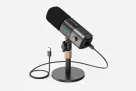
For a new solo setup, AM25X's USB path is the shortest verified route to computer audio. The microphone supplies 48 kHz/24-bit USB audio and 3.5 mm headphone monitoring in USB mode. That makes it easier to hear the recording chain and catch a problem before the guest disconnects.
SM7B takes a different route. Its XLR output and −59 dBV/Pa sensitivity place the preamp at the center of the setup. Shure's gain warning is not a defect claim; it is a compatibility requirement. A suitable console can satisfy it, but an entry-level chain may need additional hardware.
Therefore, choose AM25X for a new laptop-first desk and keep SM7B for a console that already handles it. This conditional branch is more useful than declaring one microphone universally quieter, cleaner, or more professional.
Two-person interview: solve gain twice and monitoring once
Two SM7B microphones require two suitable input paths and enough gain for both voices. That can be entirely appropriate in a designed studio, but it doubles the compatibility checks for a new build. Nearstream's two-person diagram provides a specific alternative: two AM25X microphones, one AMIX40U, and the listed supports and cabling.
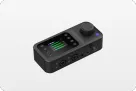
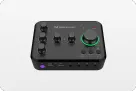
AMIX40U offers two XLR/6.35 mm combo inputs and two headphone outputs. Those outputs help each participant monitor, but they do not prove that both headphone mixes or levels will match a previous studio. Set them during rehearsal.
If the interview will be filmed, the two-camera Nearstream diagram addresses the visual plan at the same time. That prevents a late camera addition from forcing microphone positions to change for the shot.
Four-person panel: gain is only one scaling constraint
A four-person SM7B panel multiplies the need for suitable XLR inputs, gain, mounting, cables, and monitoring. It can work when the external console is designed for it, but SM7B alone does not define that system.
Nearstream's documented four-person layout makes the expansion path explicit. Two AMIX40U units connect through 3.5 mm AUX, and USB-C carries the computer output. Four microphones and, for video, four cameras and supports are part of the diagram.
A non-obvious risk appears at the AUX link: two good individual mixer tests do not guarantee a good combined feed. Rehearse all four speakers together, check the linked output, and leave headroom for overlapping speech.
Video-first production: keep local recovery in the plan
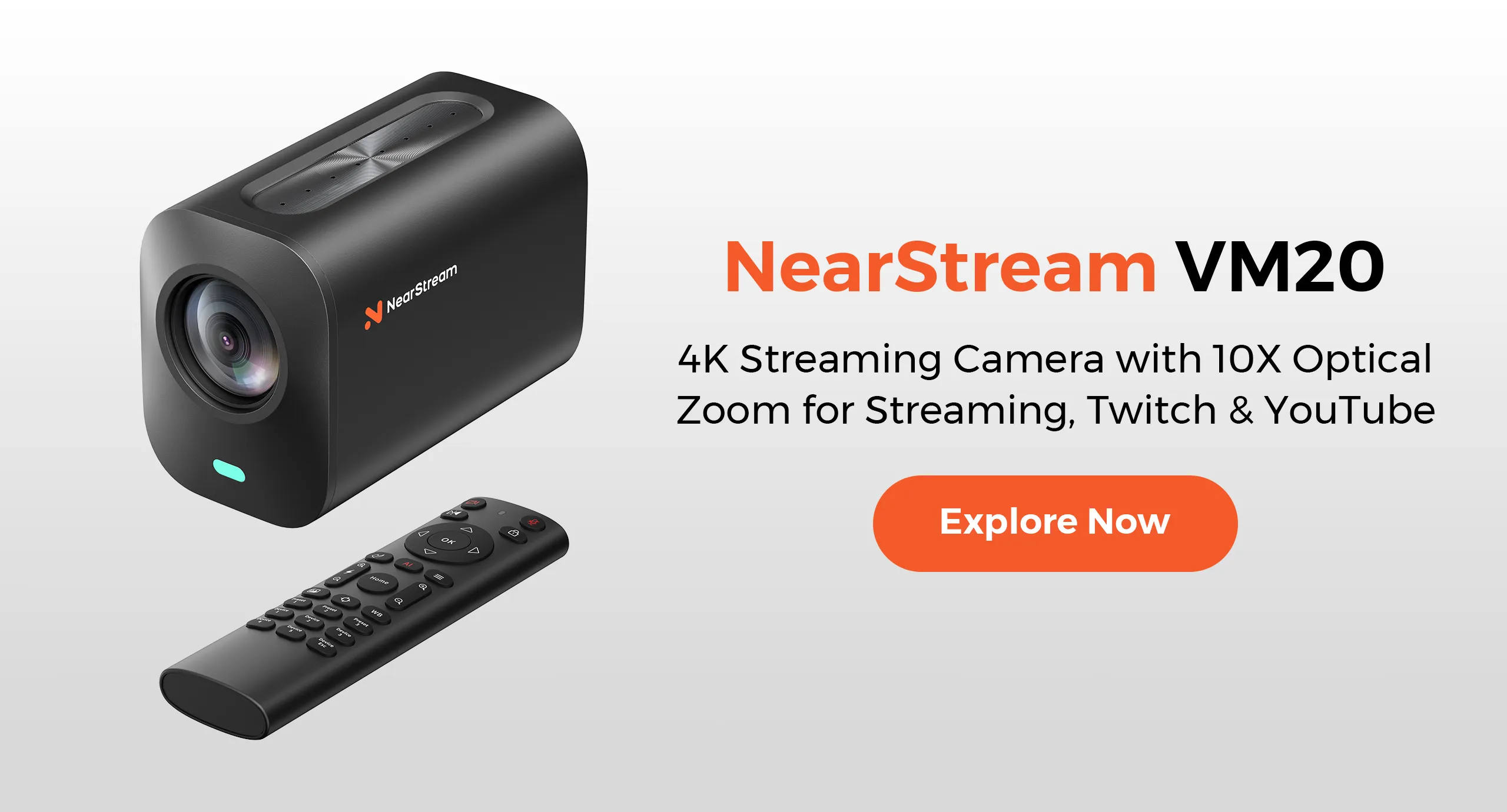
VM20 Pro supports local 4K MicroSD recording and several host and production outputs. USB 3.0, RJ45, and SD recording are specified for 4K30; HDMI and wireless AV are specified for 1080p60. This gives the video plan distinct routes with explicit format differences.
Nearstream wins this scenario because the podcasting solution places those cameras alongside AM25X microphones and AMIX40U. An optional Producer belongs only in productions that need its live-production role, not automatically in every kit.
SM7B can still serve audio in a separately designed video system. The comparison does not diminish that possibility; it simply recognizes that the microphone cannot solve camera switching, support, or local video recording.
Established audio-only studio: stability is a feature
A stable SM7B studio contains knowledge that does not appear on a shopping list: where the host sits, how the windscreen is used, which preamp settings work, and how monitoring is routed. Replacing the microphone invalidates part of that knowledge.
Shure's recommended 1–6-inch speaking distance gives the operator a concrete technique to preserve. If recordings are consistent and the external chain is reliable, AM25X's USB convenience solves no active problem. SM7B wins by avoiding unnecessary migration.
A gain decision ladder for the actual interface
Start with the interface or console, not a shopping assumption. Identify its available gain and make a normal speech recording at the intended SM7B distance. If the level is usable without pushing the preamp into audible hiss, document that setting and retain the chain. Shure's recommendation to add support when the preamp cannot provide more than 60 dB gives a concrete compatibility checkpoint.
If the voice remains too quiet, do not immediately compensate with extreme software gain. That can raise the existing noise along with the voice. Follow Shure's branch: use an appropriate inline booster or a stronger preamp, then repeat the recording. This path preserves SM7B but accepts extra hardware and setup work.
If the production has no external XLR equipment yet and the goal is a solo computer recording, AM25X USB offers a different branch. It bypasses the external SM7B preamp requirement rather than solving it. That is why AM25X is a workflow alternative: it changes the problem the buyer must solve.
If AM25X later moves to XLR, restart the gain evaluation. Its XLR path uses the external mixer's preamp and monitoring, and its USB-mode noise suppression and controls are absent. The correct final branch is therefore based on the intended connection, not on the microphone's retail category.
A close-talk and room test before replacing the microphone
Set SM7B at Shure's recommended direct 1–6-inch speaking distance using the intended windscreen. Record a consistent script while maintaining that position, then record the same script with small normal head movements. This shows whether the host can sustain the technique during a real conversation rather than during a posed microphone check.
Repeat the test with the room in its real state. Leave the computer fan, ventilation, and normal keyboard activity in the recording if they will be present during publication. Listen to the silent intervals as carefully as the speech. Echo and continuous noise often become easier to identify there.
Then test AM25X in the exact mode being considered. Begin with a repeatable position rather than automatically using its stated maximum pickup distance. In USB mode, evaluate any noise suppression against the untreated recording so that processing does not conceal a placement problem. In XLR mode, repeat without expecting those USB features.
Choose SM7B if its close-talk chain produces the reliable result and the host can maintain it. Choose AM25X if its direct or expanded path meets the production need with a position and monitoring routine the host can repeat. This is a system test, not a claim that one capsule type defeats every room.
The effort budget behind “for less”
A simpler first setup can reduce effort in three places: fewer external devices to select, fewer cable routes to trace, and fewer monitoring paths to learn. AM25X USB addresses those places for a solo computer recording. That is the defensible meaning of “for less” in this comparison.
An expanded Nearstream kit spends some of that saved effort on growth. Two-person recording adds per-person gain and headphone checks. Four-person recording adds a second AMIX40U and an AUX-linked output. Video adds camera framing, support, and file-recovery procedures. The kit remains modular, but it is not maintenance-free.
SM7B has the opposite profile in a new build: more initial attention to preamp gain, support, and close-talk technique, followed by a stable routine once those are solved. If that investment has already been made, its remaining operating burden may be lower than learning a new hybrid microphone. This is the second non-obvious reason an existing studio should often keep SM7B.
For readers also searching Shure MV7 vs SM7B, use the same discipline: verify the current official MV7 connection and control details, then test the complete chain. Do not let a second alternative distract from the actual bottleneck—insufficient gain, missing monitoring, participant count, or an unnecessary migration.
Official Specifications and What They Change
Official specifications make AM25X the more flexible connection choice and SM7B the more defined close-talk dynamic choice. Neither column supplies evidence for an unqualified sound-quality crown.
Official comparison dimension
Nearstream AM25X
Shure SM7B
Practical impact
System scope
AM25X works as a USB desktop microphone or within documented Nearstream audio-video kits.
SM7B is the microphone within a separately selected XLR preamp, interface, recorder, or console.
AM25X can reduce initial system pieces; SM7B requires the buyer or studio to design the rest of the audio chain.
Primary capture design
Supercardioid condenser with a stated maximum pickup distance of 15.7 inches/40 cm.
Dynamic moving-coil cardioid design with recommended direct speaking distance of 1–6 inches.
SM7B has explicit close-talk guidance; AM25X placement must be tested for the room and should not treat the stated maximum as a universal target.
Host connection and signal path
USB and XLR modes; 48 kHz/24-bit USB audio.
XLR output, 150 Ω rated impedance, and −59 dBV/Pa sensitivity.
AM25X can connect directly to a computer; SM7B level depends heavily on the external preamp and gain staging.
Multi-person or multi-source expansion
AMIX40U provides two combo inputs, with a documented two-mixer four-person layout.
Each SM7B position needs an appropriate XLR input and gain chain on external equipment.
Nearstream publishes participant-count layouts; SM7B expansion must be validated against the selected console.
Monitoring and control workflow
USB-mode 3.5 mm headphone monitoring, AI noise suppression, and function controls; XLR mode omits USB features.
External equipment supplies monitoring and processing; Shure's guide focuses on placement, windscreens, and gain.
AM25X simplifies standalone monitoring, but an XLR migration changes where monitoring and processing live.
Recording and live-production path
USB computer recording, XLR mixer path, and optional VM20 Pro/Producer integration.
Recording and live production depend on the external XLR device.
AM25X supports a staged audio-video system; SM7B leaves production design outside the microphone.
Physical setup and included hardware
Windscreen, desk stand, and USB cable included; standalone package omits XLR cable.
Includes standard windscreen and larger A7WS close-talk windscreen; microphone weight is 0.764 kg.
AM25X covers a basic USB desk; SM7B requires suitable support and a close-talk mounting position.
Upgrade and recovery burden
At least 125 dB SPL and at least 75 dB SNR are stated; USB and XLR enable staged expansion.
Frequency response is 50–20,000 Hz, and Shure recommends added gain support when the preamp does not exceed 60 dB.
AM25X preserves one microphone across connection modes; SM7B buyers must budget compatibility work for the preamp rather than relying on response figures.
Turning a gain control higher increases more than the wanted vocal when the chain is already noisy. That is why cranking the gain can reveal hiss instead of producing a confident recording. The correct response is to validate the preamp against Shure's guidance and the actual source level, not to treat the control's maximum position as a target.
AM25X USB bypasses that external preamp decision for a direct-computer setup. AM25X XLR does not: once connected to external equipment, gain and monitoring again belong to that equipment. This is the second-layer reason the connection mode must be chosen before judging convenience.
Why close-talk technique can outweigh an upgrade
A microphone moved from a stable close-talk position to a casual desktop position may produce a less useful recording even if the new device has more connection options. Technique and placement are part of the old system's performance. Any alternative must be tested with a repeatable position, not held or placed wherever space remains.
Switching Costs and Migration Risks
Switching from SM7B to AM25X can remove external gain hardware from a USB setup, but it also changes microphone design, monitoring, and processing. Inventory the old chain before disconnecting it.
Map the existing gain stage. Record which interface or preamp currently supports SM7B and whether an inline booster is present. AM25X USB removes that external XLR path for a solo setup; AM25X XLR still requires a suitable external device.
Change cables deliberately. Use the included USB cable for a direct AM25X computer connection. If the new design uses XLR, note that the standalone AM25X package does not include an XLR cable and plan the mixer route.
Rebuild the physical position. SM7B's official 1–6-inch close-talk practice and windscreen choice may be central to the current result. Do not place AM25X at the old position and assume equivalent room or vocal behavior.
Move the monitoring check. USB-mode AM25X supplies 3.5 mm headphone monitoring. In XLR mode, use the external chain and verify both live voice and computer return before recording.
Disable assumptions about processing. AM25X's built-in AI noise suppression and function controls are USB-mode features. Existing SM7B equalization, compression, or console settings should not be copied as if the two capture chains were identical.
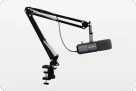
Verify support and power. SM7B weighs 0.764 kg and may already have a dedicated support. AM25X includes a desk stand, while expanded Nearstream kits can use ST20 arms and an externally powered AMIX40U. Recheck mounting and cable routes.
Run a full-show rehearsal with rollback. Keep SM7B and its preamp available until AM25X has recorded the real speaking style, duration, room noise, and final connection mode. A short microphone check cannot validate an entire episode.
For multi-person migration, add a linked-system rehearsal. Two-person kits need per-person gain and monitoring checks; four-person kits also need the AUX link and combined computer recording verified.
Frequently Asked Questions
Does every Shure SM7B setup need an inline booster?
No. Shure recommends an inline booster or stronger preamp if the preamp does not provide more than 60 dB of gain. Check the actual interface or console and the resulting recording level instead of buying a booster automatically.
Is AM25X a like-for-like SM7B alternative?
No. SM7B is a dynamic moving-coil cardioid XLR microphone, while AM25X is a supercardioid condenser with USB and XLR modes. AM25X is an alternative for connection and expansion needs, not a claim of identical capture design or sound.
Can AM25X bypass the SM7B's external preamp problem?
Yes, in USB mode it connects directly to a computer and provides headphone monitoring without a separate XLR preamp. In XLR mode, the external mixer or interface still determines gain and monitoring, so the complete chain must be checked.
Where does Shure MV7 vs SM7B fit this decision?
Treat that as a separate model comparison and verify the current official MV7 specifications before choosing. This article establishes when AM25X's USB/XLR workflow replaces an SM7B chain and when the SM7B's proven close-talk studio should remain unchanged.
The practical recommendation is to remove the SM7B only when its external gain and equipment chain are the problem. Choose AM25X for a direct USB start and later XLR expansion; keep SM7B when its close-talk studio already works and the production has no need for a new connection path.































 sales@nearstream.us