Stop Blaming Your Voice: Maybe You're Just Using the Wrong Mic
Many audio issues stem from poor microphone choice and improper technique, not your natural voice.
microphone
audio quality
voice recording
Updated: Feb 24, 2026 · 8 minutes read
Modular Video Kits for Growing Business.
We’ve all had that cringe-worthy moment. You buy a piece of "Pro" audio gear, record your first clip, and hit playback.
Expectation: A smooth, deep, radio-DJ voice. Reality: You sound like you are shouting from inside a tin can in a public bathroom. Your first instinct is to blame your genetics: "I just have a bad voice." Your second instinct is to blame the gear: "This microphone is junk." Stop right there. 90% of audio issues aren't about your vocal cords or the price tag on the box. They are about physics. Today, we are using the AM25X to demystify the "black magic" of audio. We are going to teach you how to choose a microphone setup that fixes your confidence, saves your voice, and upgrades your entire digital presence.
Part 1: The "Bathroom Effect" (Why Positioning is Everything)
Let’s start with the mistake everyone makes. You unbox your new microphone for pc, place it next to your monitor (so it’s out of the way), and start talking.
This is why you sound terrible.
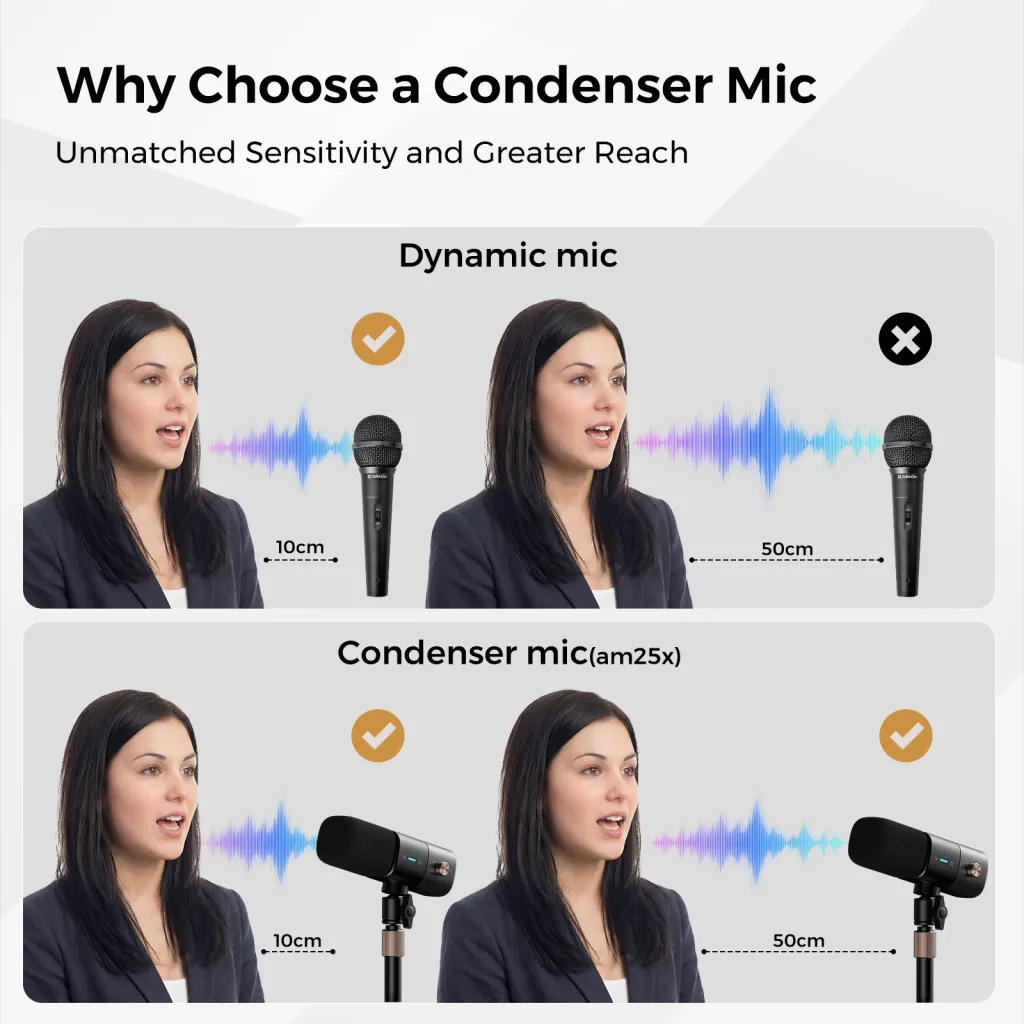
Microphones are like ears. If you stand across the room and whisper to a friend, they have to strain to hear you. They also hear the traffic outside, the fridge humming, and the TV in the other room.
When you place the AM25X two feet away, the "Signal-to-Noise Ratio" is destroyed. The "Signal" (your voice) is weak. The "Noise" (room echo) is strong. To compensate, your computer cranks up the volume (Gain), which just makes the static louder.
The Fix: The "Shaka" Rule
You don't need a soundproof studio. You need to close the gap.
Make a "Hang Loose" (Shaka) hand sign.
Touch your thumb to your lips.
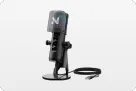
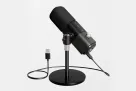
Touch your pinky to the AM25X grille.
That distance—about 6 inches (15cm)—is the Golden Zone. When you get this close to the AM25X, a phenomenon called the Proximity Effect kicks in. The bass frequencies in your voice are naturally amplified. Suddenly, that "tinny" sound disappears, replaced by a warm, rich tone that sounds expensive. Pro Tip: Don’t talk at the mic; talk past it. Angle the AM25X slightly (45 degrees) so it points at the corner of your mouth. This prevents those harsh popping sounds (plosives) when you say words like "Project" or "Banana."
Part 2: The "Lombard Effect" (Why Your Throat Hurts)
Do you feel exhausted after a day of Zoom calls? Does your throat feel scratchy after an afternoon of dictating notes?
You are suffering from the Lombard Effect. It’s a reflex: when we hear poor audio (or can’t hear ourselves clearly), we subconsciously start shouting. We tighten our necks, push from our throats, and raise our pitch.
You might think you are talking normally, but your body is in "Shout Mode."
The Dictation Microphone Solution
If you are using voice typing or AI tools, this fatigue is a productivity killer. You need a dictation microphone that is sensitive enough to pick up a whisper.
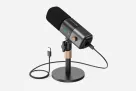
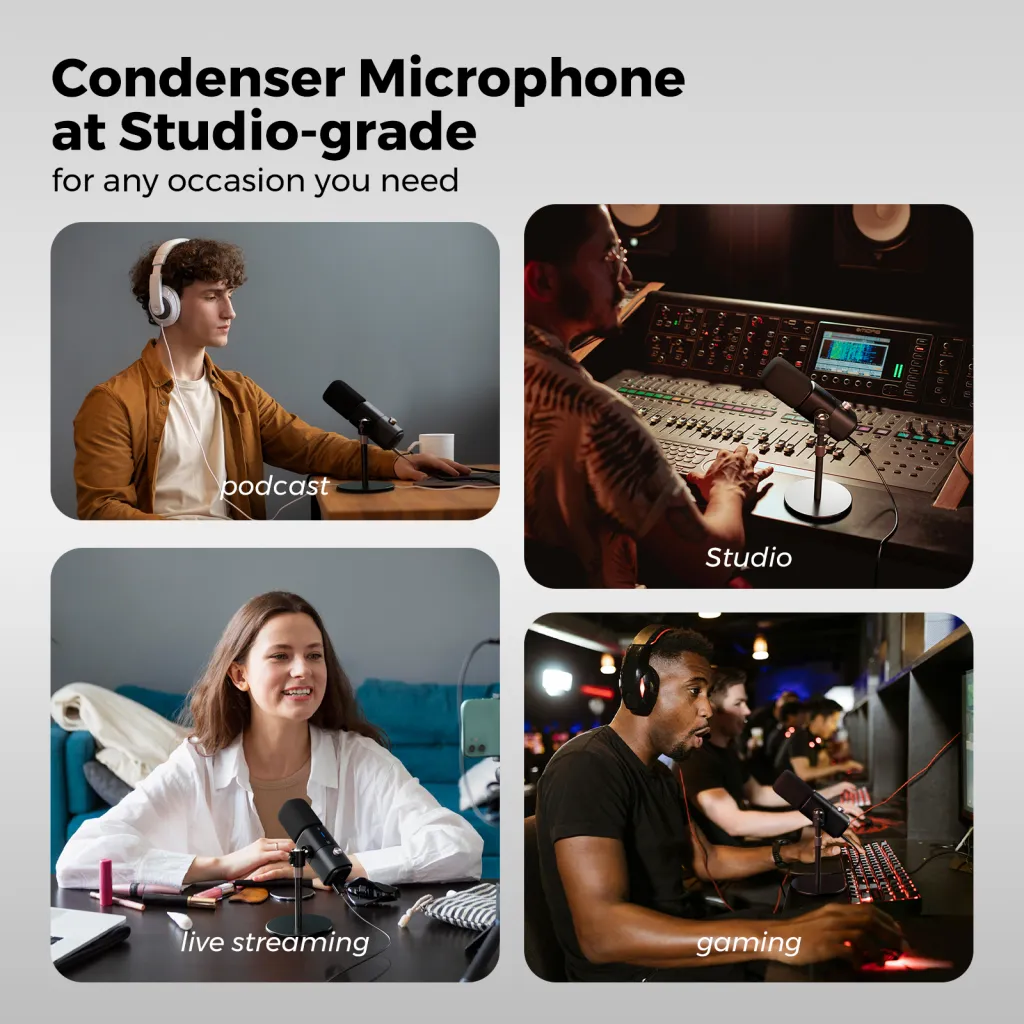
The AM25X Difference: The AM25X is a Condenser Microphone. Unlike the dynamic mics used by rock stars (which you have to scream into), the AM25X is electrically charged. It is hyper-sensitive.
The Library Test: Try speaking to the AM25X as if you are in a library. Soft. Relaxed. Breathless.
The Result: It captures every detail perfectly.
When you switch to a high-sensitivity mic, you stop projecting. You relax your shoulders. You save your energy. For professionals who talk for a living, this isn't just about sound quality—it's about health.
Part 3: The Psychology of "The Cringe" (Why You Hate Your Voice)
"Do I really sound like that?"
Yes, and no. There are two ways humans hear sound:
Air Conduction: Sound waves travel through the air into your ear. (This is how others hear you).
Bone Conduction: Sound vibrations travel through your skull directly to your inner ear. (This is how you hear you).
Bone conduction adds a lot of deep bass. That’s why the voice in your head sounds deeper and richer than the voice on the recording.
Bridging the Gap
Cheap microphones (like the one in your webcam) are tiny. They physically cannot capture bass frequencies. So, they strip away the warmth, making your voice sound even thinner and higher-pitched than it actually is. That’s why you cringe—it sounds like a stranger.
Why the AM25X Helps: The AM25X uses a Large Diaphragm Capsule. Think of it like a big drum vs. a tiny drum. The big drum resonates with deeper sounds. While no microphone can replicate bone conduction, the AM25X captures the "Chest Resonance" that cheap mics ignore. It fills in those missing lower frequencies. The result? The recording sounds much closer to the voice in your head. It’s less jarring, more familiar, and gives you way more confidence to hit "Publish."
Part 4: Headset vs. Desk Mic (The Comfort War)
For years, the standard advice for microphone for pc setups was "Just get a gaming headset."
But let’s be honest: Headsets are annoying.
The Dent: They leave a dent in your hair.
The Sweat: Leather earcups get hot after 30 minutes.
The Clamp: They squeeze your glasses into your temples.
The Look: You look like an air traffic controller, not a creative director.
The "Naked" Experience
Switching to a desk microphone like the AM25X is about physical freedom. You sit down. You speak. There is nothing touching you.
You can lean back in your chair. You can sip your coffee. You can turn your head. The AM25X sits elegantly on your desk (or boom arm), doing its job without invading your personal space. If you create content, it looks cleaner on camera. If you are in meetings, you look more approachable. The Best Microphone is the one that disappears.
Part 5: "Authenticity" is the New Perfect
In the era of AI and polished content, people are craving something real. We used to think a good microphone should make you sound like a movie trailer narrator—booming, deep, and fake. That trend is dead. Today, whether you are a YouTuber, a Podcaster, or a Team Lead, the goal is Authenticity.
The "Transparent" Sound
The AM25X is tuned for what audio engineers call "Transparency."
It doesn't artificially boost the bass to make you sound muddy.
It doesn't crank the treble to make you sound crisp but robotic.
It captures the "texture" of your voice. The breath, the pause, the natural cadence.
When you use a high-quality dictation microphone, the listener stops fighting to hear the words. The "cognitive load" of bad audio is removed. They stop thinking about the connection quality and start connecting with you.
Part 6: A Crash Course in Specs (What Actually Matters?)
When learning how to choose a microphone, the spec sheet can look like alien language. Let’s translate the important stuff for the AM25X.
1. Cardioid Polar Pattern (The "Blinders")
Imagine the microphone is wearing horse blinders.
What it sees: The front (You).
What it ignores: The back (Your keyboard) and the sides (Your room echo).
Why it matters: If you work from home, you don't have a treated studio. You have a messy room. The AM25X’s cardioid pattern helps "delete" the room, focusing only on your voice.
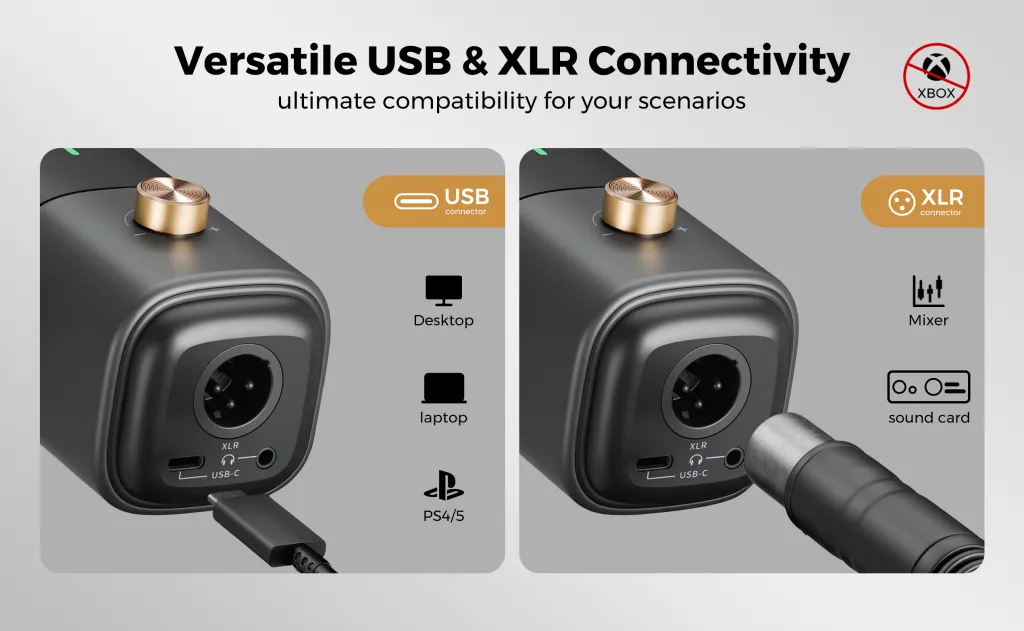
2. USB-C Plug-and-Play (The "No-Friction" Life)
Old school pro audio required an XLR cable, a heavy interface box, and confusing driver software. The AM25X has a built-in sound card.
Plug it in.
Select it in settings.
Done. It works with Mac, Windows, PS5, and even your iPhone (with an adapter).
3. Zero-Latency Monitoring (The Headphone Jack)
See that 3.5mm jack on the bottom of the AM25X? That’s crucial. Plug your wired headphones in there, and you can hear yourself in real-time.
Why? It stops you from shouting (because you can hear how loud you are).
Confidence: You know exactly what you sound like to others, so you never have to ask "Can you hear me?" again.
Part 7: Real World Scenarios (One Mic, All Day)
How does the AM25X fit into a chaotic workday?
09:00 AM - The Stand-up Meeting You are sipping coffee. The mic is on the desk. You speak softly. Your team hears you crystal clear, without the background noise of your washing machine. You look professional without a headset. 01:00 PM - The Vibe Coding Session You are dictating code to Cursor AI. Precision matters. A mumbled variable name breaks the code. The AM25X captures the sharp "T"s and "K"s perfectly. The AI transcribes with 99% accuracy. 08:00 PM - The Content Grind You are recording a voiceover for a tutorial. You pull the mic closer (remember the Shaka rule). You drop your voice an octave. The AM25X captures that rich, "storyteller" tone. No need to EQ it later.
Part 8: Troubleshooting Your Room (Free Hacks)
Even the best microphone can’t fix a terrible room completely. But you don't need to glue foam to your walls. Here are 3 free hacks to make your AM25X sound like a $1,000 setup:
The Pillow Fort: If you are recording a voiceover, put a pillow behind the microphone. It catches the sound waves that fly past the mic, stopping them from bouncing off the wall and coming back as echo.
The "Rug" Effect: Hard floors kill audio. Throw a rug (or a blanket) under your chair. It absorbs reflections.
The Corner Trap: Don't sit in the exact center of the room. Sit slightly closer to a corner (but face out of the corner). It breaks up standing waves.
Conclusion: Upgrade Your Input
We spend thousands on cameras to look good. We spend thousands on clothes to look sharp. But we ignore the one thing that carries our ideas: Our Voice.
Bad audio is a subconscious signal of low quality. It makes people tune out. It makes AI tools fail. It makes you tired.
The AM25X isn't just a gadget. It’s a communication upgrade. It invites you to stop shouting and start speaking. It invites you to take off the headset and get comfortable. It invites you to stop hiding your voice and start enjoying it. Stop blaming your vocal cords. Move the mic closer, lower your shoulders, and let the world hear you clearly.
FAQ: Quick Answers for the Audio-Curious
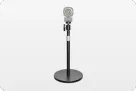
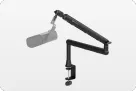
Q: Will the AM25X pick up my mechanical keyboard? A: It’s a microphone, not a black hole—so yes, if the keyboard is loud, it will hear it. However, you can fix this by physics. Place the microphone between you and the keyboard. The "dead zone" of the Cardioid pattern will face the keys, significantly reducing the clicking sound compared to a webcam mic that hears everything. Q: Do I need a Boom Arm, or is the desk stand enough? A: The included desk stand is heavy and solid. It works great. But if you want to unlock the full potential (and save desk space), a cheap boom arm is a great upgrade. It gets the mic closer to your mouth without you having to hunch over. Q: Is this mic good for ASMR? A: Surprisingly, yes. Because it has a very low "noise floor" (it doesn't hiss when it's quiet), you can crank up the sensitivity for whispers and tapping sounds. It captures the texture beautifully. Q: I’m not a techie. Is there software I need to learn? A: No software. The AM25X has physical knobs for Gain (Volume) and Echo (Reverb) right on the body. You adjust it with your fingers, not your mouse. It’s tactile and instant. Q: Can I use it with my phone? A: Yes! With a simple USB-C to USB-C (or Lightning) adapter, the AM25X works with Androids and iPhones. It’s a massive upgrade for recording TikTok voiceovers or mobile podcasts.




































 sales@nearstream.us