Adding a third microphone doesn't make your podcast 50% harder — it makes it roughly twice as hard, and a fourth roughly doubles it again, for a reason that has nothing to do with the microphones themselves. A 3- or 4-person podcast setup is a gain-structure problem: every additional open microphone re-hears every voice and re-amplifies the room, and unless each channel is placed and leveled deliberately, four good mics produce worse audio than two.
This guide explains the physics behind that, then builds the working configuration: per-channel discipline, chained mixers for four inputs, and a multi-camera layout one operator can run. If you're still deciding whether your show needs this tier at all, the podcast kit buying guide sizes kits by headcount first.
Why Multi-Mic Recording Is a Different Problem
Multi-mic recording is hard because microphones don't respect ownership: every open mic captures every voice, and the channels fight each other. Understanding three underlying mechanisms explains nearly every "why does my roundtable sound bad" complaint.
Mechanism one: crosstalk stacks. With two mics, each voice leaks into one other channel. With four, each voice leaks into three — and when those channels are summed, the same voice arrives four times with slightly different travel times. Those micro-delays smear transients, hollow out the tone, and create the characteristic "recorded in a bathroom" sound of an undisciplined roundtable. The mics didn't get worse; the geometry got more crowded.
Mechanism two: noise floor multiplies. Each open channel contributes the room — air conditioning, computer fans, chair creaks, traffic. Four open channels means four copies of the room added together. This is why a four-person recording in a decent-sounding room can still come out noisy: the room is being recorded four times simultaneously. It's also why the mute-an-empty-seat habit matters so much at this scale: an unoccupied channel isn't silent, it's a dedicated room-noise feed.
Mechanism three: gain diversity widens. Two hosts can be coached into similar mic technique. Four panelists won't be — someone leans back, someone shouts punchlines, someone whispers asides. Without independent gain per channel, the loudest voice sets the ceiling and everyone else disappears under it. And the loud voice is usually the host, which means the guests — the reason listeners tuned in — are the first casualties of a shared-gain setup.
A fourth, softer mechanism: conversation dynamics change. Duos alternate; panels interject. Laughter, reactions, and overlapping debate are the energy that makes roundtables worth listening to — and they're also the moments that clip channels and flood crosstalk. You can't engineer the overlap away without killing the format's appeal, so the system has to absorb it: gains set with headroom for laughter, mics placed so overlapping voices still favor their own channels. This is the part of multi-person audio that's closer to live sound engineering than to recording, and it's why the soundcheck protocol below includes a deliberate everybody-talks-at-once test.
All of these mechanisms point at the same fix: close placement, independent channels, and per-channel gain control. Gear is the delivery mechanism for that discipline — which is why the signal chain matters more than the shopping list, and why the sections below are organized around the chain rather than around products.
The 3 & 4 Person Podcast Setup Signal Chain, Built on the Physics
The roundtable chain is four microphones into four independently gained channels, summed once and sent to the computer over a single cable. Here's how each link serves the physics above.
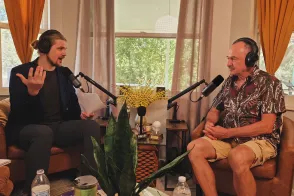
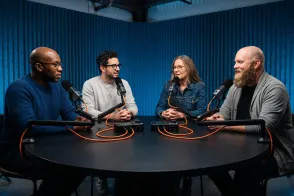
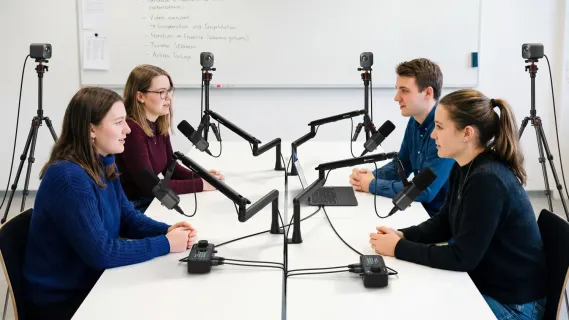
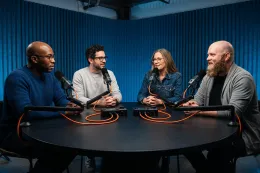
Placement is the first gain stage. Seat everyone equidistant around the table — a round or square table, not a long rectangle — with each mic 6–12 inches from its speaker's mouth, angled toward them and away from neighbors. Because sound level drops steeply with distance, close placement makes each mic hear its own voice many times louder than anyone else's. This single habit does more for a four-person recording than any equipment upgrade; the two-person setup guide covers the placement math in detail, and it scales directly.
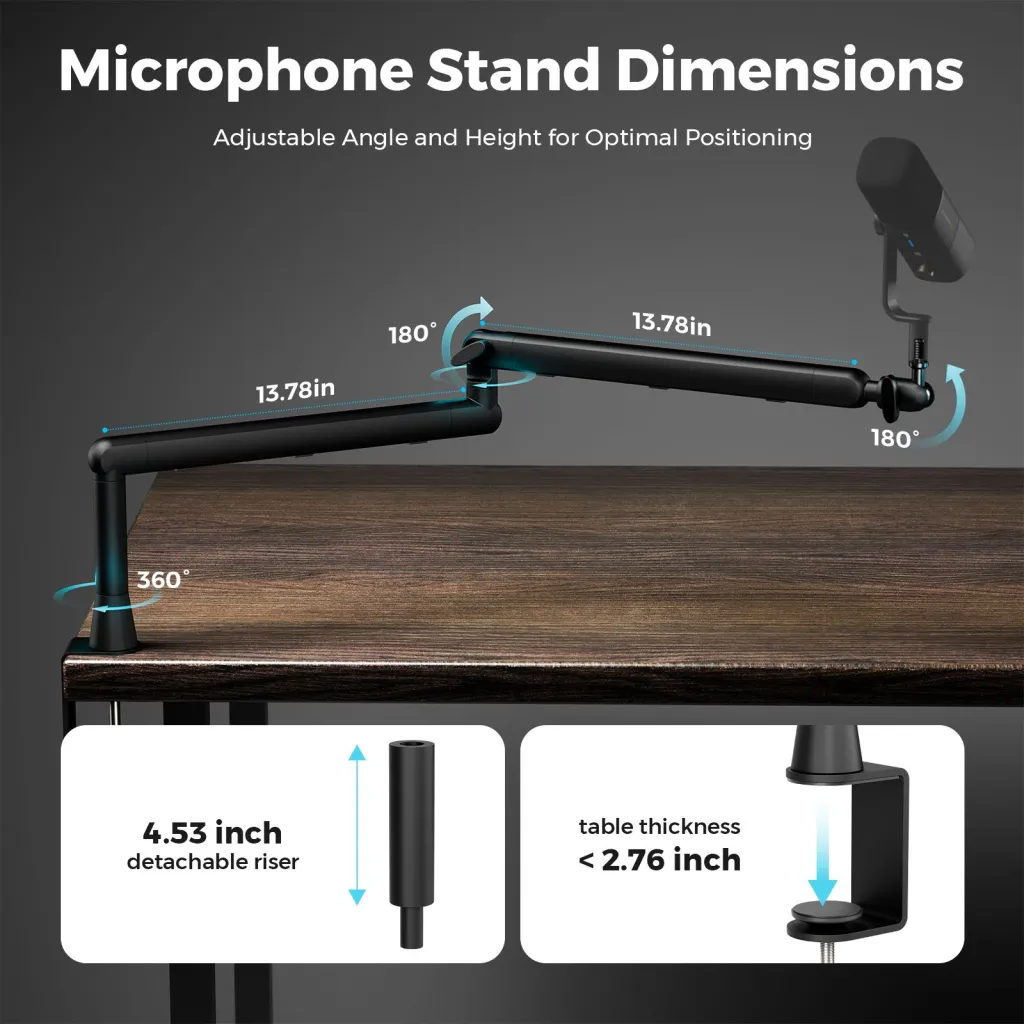
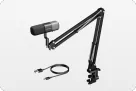
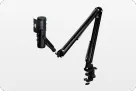
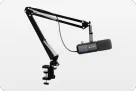
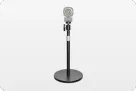
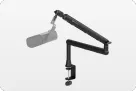
Boom arms enforce the discipline. Four people around a table means four postures, and posture drift is crosstalk's best friend. A boom arm per seat — like the ST20 — lets each guest find a comfortable position while the mic stays where the physics needs it. Desk stands fail at this scale because guests inevitably push them aside for laptops, notes, and coffee.
Monitoring closes the loop. With four voices, the person running the session needs to hear what the mix actually sounds like — not what the room sounds like. Wired closed-back headphones on the mixer reveal problems the room hides: a channel creeping hot, a guest drifting off-mic, an air conditioner the panel has stopped noticing but the mics haven't. Checking the mix in headphones during the first five minutes — not just at soundcheck — is how a one-person crew catches drift before it costs an episode. It's also how you learn, over a few sessions, what "right" sounds like, which is the real skill the gear is delivering.
Independent channels are non-negotiable. Each mic needs its own preamp and gain knob, set during a soundcheck where each person speaks at their real conversational volume. The goal: every channel peaking at roughly the same level with nobody clipping. Ten minutes of soundcheck per session is the entire cost of balanced four-person audio.
Two routes: a single mixer with four or more inputs, or two compact dual-input mixers chained together. The chained route is the practical one for creator-scale studios — and it's the one most guides skip.
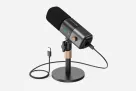
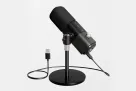
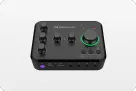
The principle behind chaining: a compact mixer's output is just an audio signal, so one mixer's mixed output can feed another mixer's line input. In the NearStream configuration, four AM25X microphones connect by XLR into two AMIX40U units — two mics each — and the second AMIX40U links to the first over a 3.5mm aux connection. The first unit then carries all four voices to the computer over one USB-C cable. Each pair of voices keeps its own preamps and gain knobs, which preserves the per-channel discipline the physics demands.
The trade-off to understand: channels three and four arrive pre-mixed by the second unit, so their relative balance is set at that unit's knobs — get the soundcheck right and this is invisible in practice, but treat that unit's gain knobs as "set once, then hands off" for the session. The scenario where chaining earns its keep: your show grew from two hosts to a four-person panel, and instead of replacing the mixer you already own, you add a second identical unit, two more mics, and cables. Growth becomes an add-on purchase rather than a garage sale.
The Multi-Camera Layout for a Roundtable
A four-person video podcast needs two cameras minimum — a wide establishing shot and one tighter angle — and four for the fully produced look: wide plus one close-up per seat. The constraint at this scale isn't budget; it's operability.
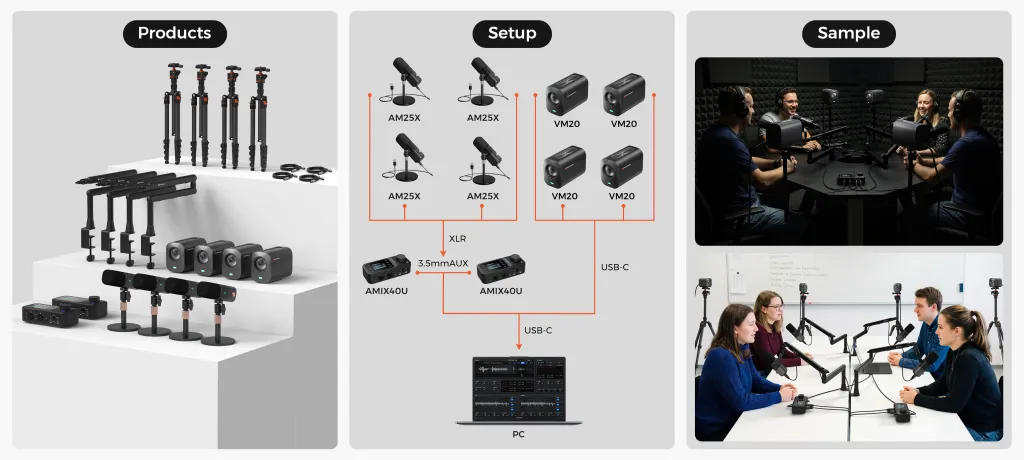
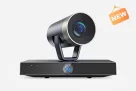
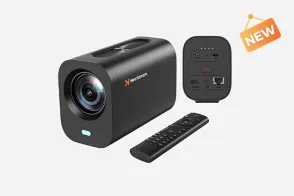
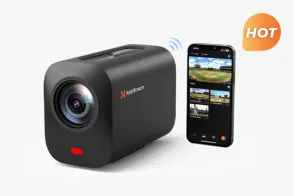
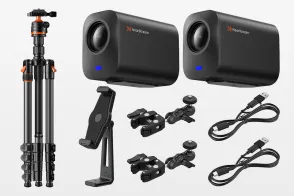
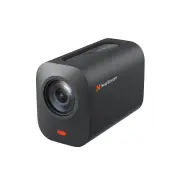
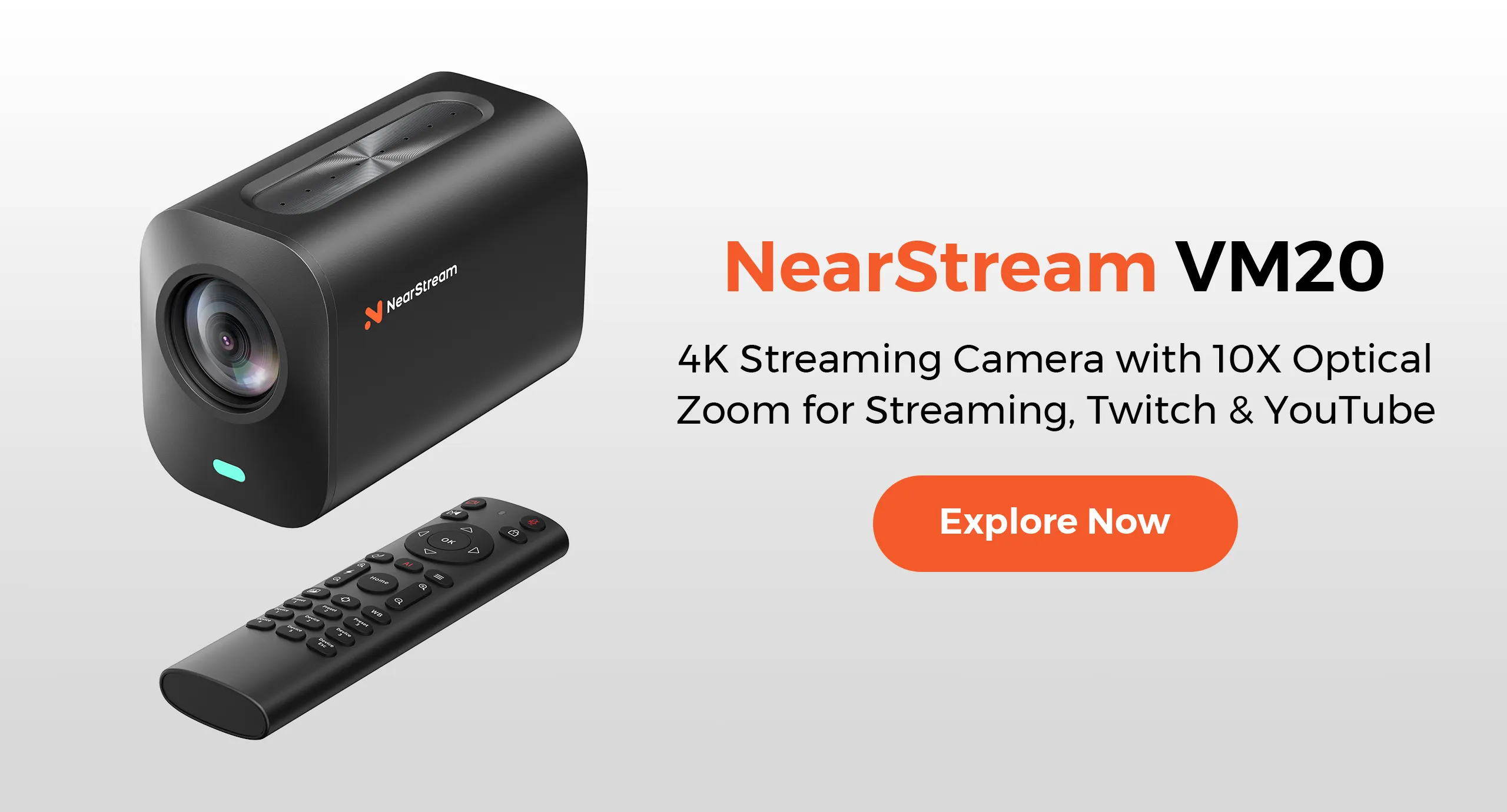
Four HDMI cameras would mean four capture cards and a hardware switcher — the "old way" that turns a podcast into a production truck. USB-connected streaming cameras collapse that: each VM20 runs one USB-C cable to the computer, and the remote control lets a single operator — usually one of the hosts — frame every angle before recording. The 10x optical zoom is what makes the close-ups viable: cameras can sit along the walls, outside the mics' pickup pattern and the panel's eyelines, and still frame a tight head-and-shoulders shot on each seat.
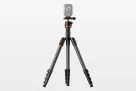
Layout that works: the wide camera centered on the table's long axis, elevated slightly above eye level on a tripod like the ST30; close-up cameras opposite their respective seats, at eye level. Frame everything during the soundcheck — the same ten minutes — then don't touch it. With four people talking over each other, mid-recording camera adjustments are a guaranteed way to miss the moment.
There's a second camera trade-off most roundtable guides ignore: editing time scales with angle count. Every additional camera angle is footage someone must review, sync, and cut — and with four voices, the conversation moves fast enough that switching decisions pile up. If your situation is a weekly show with one editor (probably you), two well-chosen angles cut faster and ship sooner than four angles that triple the post-production. If your situation is a flagship monthly episode with post-production time budgeted, the four-angle layout earns its editing hours. The non-obvious insight: camera count is an editing budget decision first and a visual quality decision second.
One more detail that separates watchable roundtables from chaotic ones: sightlines. Guests should be able to see each other without leaning around a microphone or a camera tripod — conversation flows through eye contact, and a panel that can't see itself talks like four people on separate phone calls. Keep boom arms low-profile between faces, and place tripods behind the guests' natural sightlines, not inside them.
When You Don't Actually Need Four of Everything
The four-mic roundtable is the right answer for a fixed four-person panel — but three common formats should buy less, and buying the full rig for them wastes money and adds failure points.
Rotating fourth seat. If your show is three permanent hosts plus a changing guest, mic for the panel you have every week and treat the fourth channel as guest infrastructure you set up when booked. A permanently open fourth channel is a permanently open noise source.
Some guests are remote. A panel with two in-studio hosts and two remote guests needs two mics, not four — remote voices arrive through software with their own tracks. The in-room rig should match in-room headcount, always.
The show might not stay multi-person. Panel formats collapse back to duo shows more often than creators expect. The chained-mixer topology handles this gracefully — unplug the second unit and you're a two-person studio again — which is one more reason to prefer it over a single large console you'd be stuck with.
Scenario: The Panel Episode That Sounded Like One Voice
A four-host show records its best episode yet — an hour of sharp disagreement, exactly the energy they wanted. In the edit, it's mush: the quiet analyst's points are buried under the loud host's crosstalk on every channel, the room's air conditioner hums on four tracks at once, and noise reduction smears everyone's consonants. The episode ships at half quality or doesn't ship.
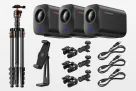
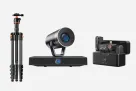
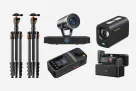
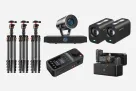
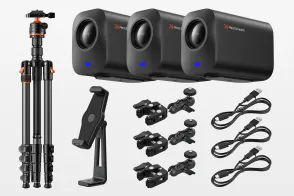
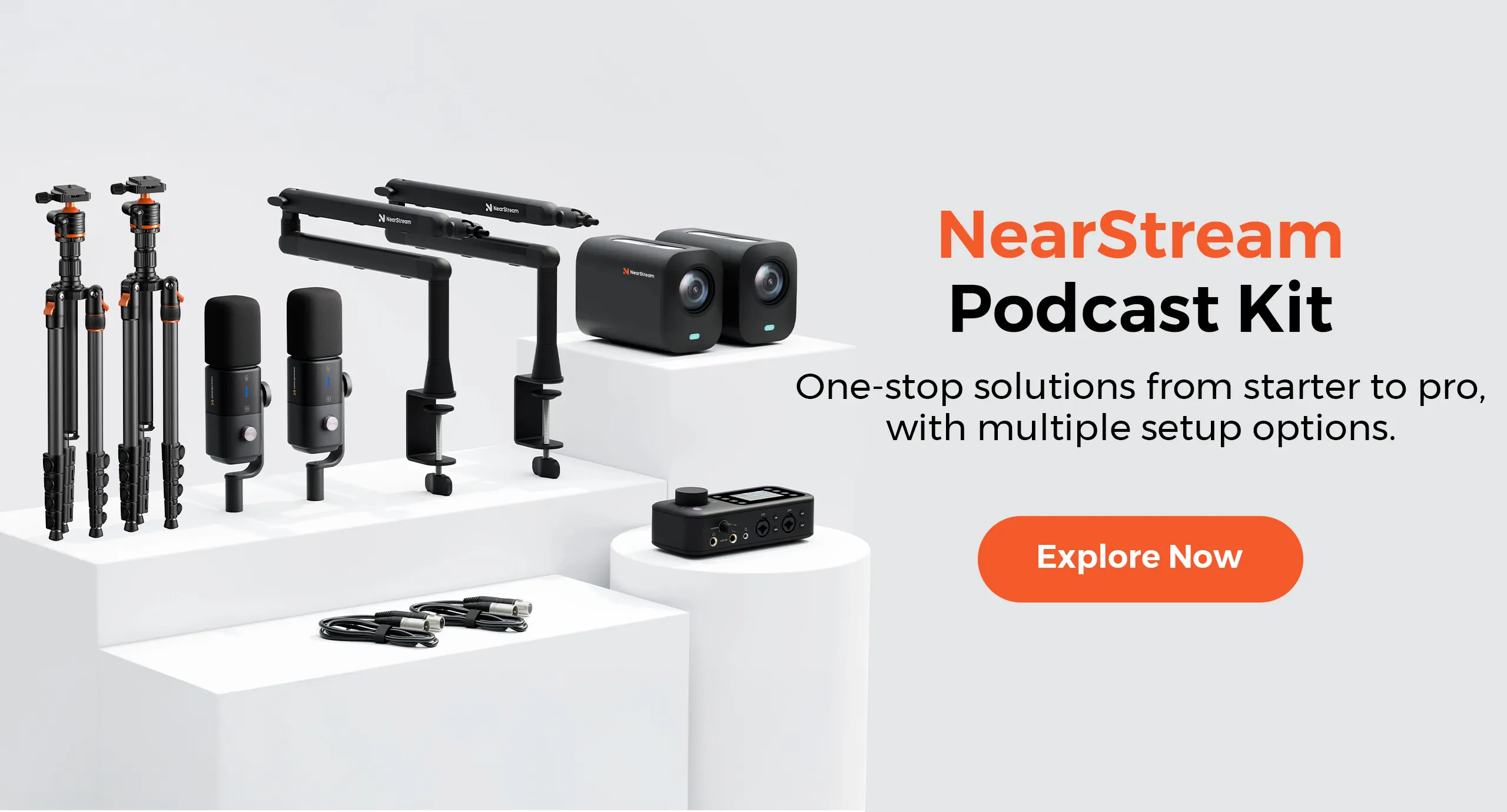
Every element of that failure traces to the mechanisms above, and every element is preventable at soundcheck: mics at 6–12 inches, gains set per person, unused channels muted, the loud host coached back from the capsule. None of it requires better gear than four condenser mics, two chained mixers, and boom arms — the configuration in the NearStream multi-person podcasting bundle, which packages four AM25X mics, two AMIX40U units, four VM20 cameras, arms, tripods, and cables with the wiring diagram included. Its honest ceiling is four channels; a six-person panel needs larger-format hardware entirely.
Frequently Asked Questions
What equipment do I need for a 4 person podcast setup?
Four microphones on four boom arms, four XLR cables, and four channels of gain control — either a four-input mixer or two dual-input mixers chained over an aux link. Add wired headphones for monitoring and two to four USB-connected cameras for video. The piece people forget is the soundcheck: ten minutes of per-person gain setting before every session is what makes the gear list actually work.
Why does a multi-person podcast sound muddy or echoey?
Almost always crosstalk: each voice is being captured by multiple mics at slightly different distances, and the summed tracks smear together. The fixes are geometric, not electronic — mics closer to each speaker (6–12 inches), seats equidistant, and per-channel gain so no single loud voice opens up everyone else's noise floor. If it still sounds roomy, the room itself is the remaining variable: soft furnishings beat plugins.
How do I connect four microphones to one computer?
The creator-scale answer is two compact dual-input mixers chained together: two mics into each unit over XLR, the second unit's output feeding the first over a 3.5mm aux link, and the first unit sending everything to the computer over a single USB-C cable. The alternative is one mixer with four or more native inputs — simpler to conceptualize, but a bigger single purchase and a harder downgrade path if the panel shrinks.
How many cameras does a four-person video podcast need?
Two works: a wide shot holding the whole table and one tighter angle you direct at the current speaker. Four — wide plus a close-up per seat — matches professional panel shows and remains a one-person job when the cameras connect over USB-C and frame by remote. Beyond four angles, editing time grows faster than perceived quality for most shows.
Your Next Step
Run the headcount check honestly: permanent in-room voices determine your mic and channel count, rotating guests determine your expansion path. If your panel is two or three today, start with the two-person setup and grow by chaining; if you're configuring all four seats now, the NearStream podcasting solutions page lets you spec the full roundtable — or request a custom configuration if your room doesn't fit the standard layout.


























 sales@nearstream.us