Podcast Equipment That Pays for Itself: Reaching the Sponsorship-Ready Bar
Sponsors don't pay for your gear — they pay for the quality bar your gear guarantees.
podcast monetization
podcast equipment
video podcast
Updated: Oct 16, 2026 · 8 minutes read
Modular Video Kits for Growing Business.
Podcast equipment pays for itself when it crosses the quality threshold sponsors and platforms require — not before. This guide prices that threshold (~$250 to reach 'listenable,' ~$1,500–$1,700 to reach 'sponsorship-ready'), maps equipment tiers to revenue models, and shows why reliability is the most monetizable spec of all.
Key Takeaways
The first monetization threshold is audio that never distracts — roughly $250 of equipment. Below it, no revenue model works; above it, all of them can.
The second threshold is video quality a brand will sit next to — roughly $1,500–$1,700 for a two-person show. This is the tier where mid-roll sponsors stop saying no.
Sponsors buy consistency, not peaks: one bad-sounding episode in a media kit does more damage than ten good ones repair. Reliability is a revenue feature.
Match spending to your monetization stage: validation ($0–250), sponsorship-ready (~$1,500+), scale (redundancy and efficiency). Buying stage-3 gear at stage 1 delays profitability.
Every equipment purchase should answer one question: does this remove a reason a sponsor, platform, or listener would say no?
There's a fantasy version of podcast monetization where you buy a broadcast-grade rig and the sponsors follow. The reality is more interesting: sponsors don't pay for your equipment — they pay for the absence of quality problems in the episodes their ads will sit inside. That reframing turns gear buying into a financial question with actual answers: there are two quality thresholds that gate podcast revenue, each has a price, and the fastest path to profitability is crossing them in order and stopping until revenue tells you to continue. All prices below are typical late-2026 US street prices; verify at checkout.
A story that shows the shape of the trap: a two-host show launches with a $4,000 dream rig — mirrorless cameras, flagship dynamic mics, a capture-card chain. The image is gorgeous; the operation is fragile. By episode nine they've missed two weeks to technical failures, the upload cadence that feeds the algorithm is broken, and the audience graph is flat. Meanwhile a rival show on a $1,700 matched kit has shipped fourteen consecutive weeks, crossed the sponsorship-readiness threshold quietly, and just signed its first mid-roll. Twelve months in, the cheap-looking rig has generated revenue; the dream rig has generated apologies. The difference was never the gear — it was which purchases were gating revenue and which were decorating it.
The Two Thresholds That Gate Podcast Revenue
Threshold 1: Listenable (~$250). Audio a stranger will tolerate for an hour without noticing it. Below this line, nothing monetizes — not affiliate links, not listener support, not ads — because every revenue model multiplies an audience, and bad audio caps the audience. Crossing it costs less than people assume: one decent microphone used correctly.
Threshold 2: Sponsorship-ready (~$1,500–$1,700 for two people). Video and audio a brand manager will approve their logo sitting next to, plus the consistency to hit it every week. This is the tier where mid-roll sponsors, platform video payouts, and clip-driven discovery all unlock at once.
Everything above Threshold 2 is scale spending — redundancy, efficiency, polish — and it's real, but it should be funded by revenue, not hope. The rest of this article prices both thresholds and the equipment logic inside each.
One clarifying distinction before the numbers: this article separates equipment that gates revenue from equipment that grows revenue. Gating gear is binary — below the threshold, a revenue line is closed to you regardless of talent. Growth gear is marginal — a nicer camera may nudge retention a percent or two. Almost all beginner overspending is growth gear purchased at gating prices; almost all of this guide is about identifying the two gates precisely and crossing them for the minimum viable spend.
The Three Revenue Lines Equipment Actually Unlocks
It's worth being concrete about what "monetization" means mechanically, because each revenue line has a different quality gate:
Listener support and affiliate income gates at Threshold 1 only. Your existing listeners already like you; they need audio that doesn't punish loyalty. A $250 rig fully unlocks Patreon-style support and affiliate links — which is why these are the right first revenue lines for a young show.
Platform payouts (YouTube ads, Spotify Partner Program video revenue, TikTok's creator programs) gate on video presence plus watch time. An audio-only show is structurally locked out of all three; adding one camera and one light is what opens them. The payouts scale with audience, but the door is equipment.
Sponsorships gate on Threshold 2 plus consistency. Direct sponsors are the largest revenue line for most mid-size shows, and they're the pickiest evaluator: they sample recent episodes, judge whether their brand is safe inside your content, and price accordingly. Notice the asymmetry: sponsorship income is the line most sensitive to equipment quality, and also the line most sensitive to audience size — gear clears the gate, but only the show fills the seats.
What a Sponsor Samples in 90 Seconds
Picture the brand manager evaluating your show. She opens your latest episode, scrubs to three random points, and spends maybe ninety seconds. Here's her actual checklist, translated into equipment terms:
Seconds 0–15: does the voice sound "close"? Proximity effect — the warmth of a mic six inches from the mouth — reads instantly as professional. It's a free property of mic placement, available to an $80 mic and a $400 one alike.
Seconds 15–40: are the two hosts level-matched? Nothing signals "amateur" faster than one loud host and one quiet one. That's a mixer-with-separate-channels property.
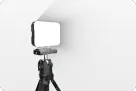
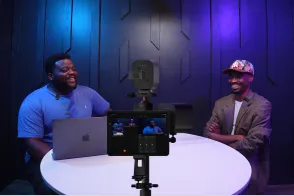
Seconds 40–60: does the frame look intentional? Lit faces, eye-level camera, a background with depth. One softbox and a tripod.
Seconds 60–90: any obvious flaw? Hum, echo, clipping laughter, a dead camera angle. One flaw and the rate drops or the email goes unanswered.
Every item on that list is a Threshold 2 component — none requires flagship gear, and all of them require consistent execution. The expensive failures happen when a show buys past the bar (a $3,700 flagship rig) and then ships a flawed episode anyway because the chain was too complex to run consistently.
Threshold 1, Priced: The $250 Listenable Bar
Item
Budget option
Price
Upgrade option
Price
Microphone
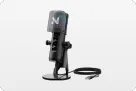
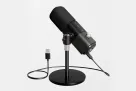
NearStream AM25X (USB/XLR)
$80
Shure MV7+ (USB/XLR dynamic)
~$279
Camera (optional at this tier)
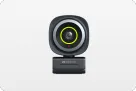
Logitech StreamCam, 1080p60
~$100
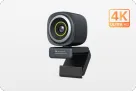
Elgato Facecam Pro, 4K60
~$300
Light
Window + desk lamp
~$40
Entry softbox kit
~$100
Total
~$220–250
~$680
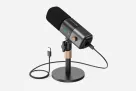
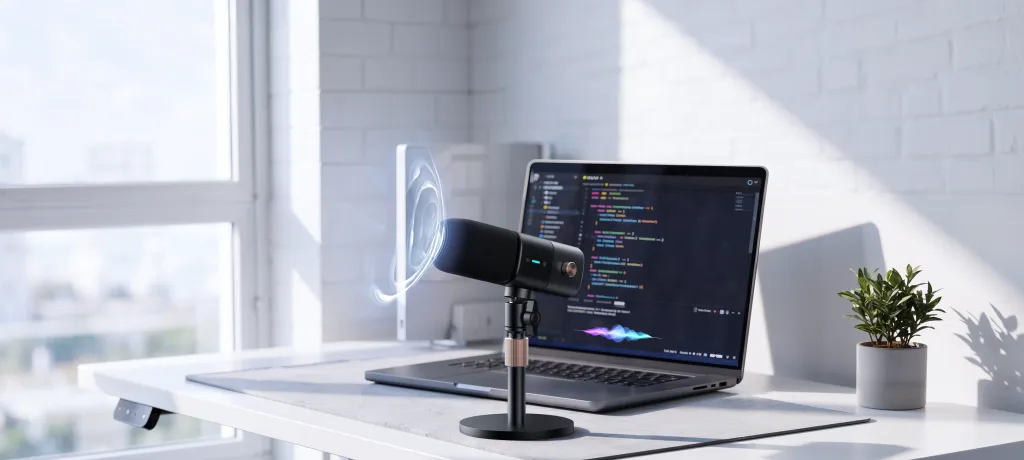
The microphone decision at this tier deserves the honest comparison. The Blue Yeti (~$130) is the famous answer and works — but it's USB-only, so it dies the day you add a co-host and a mixer. USB/XLR hybrids like the MV7+ (~$279) or the AM25X ($80) survive that upgrade; the MV7+'s dynamic capsule is the better tool in a loud untreated room, while the AM25X's condenser captures more presence in a quiet one and costs $200 less — money that buys your first mixer later. There is no wrong choice in this row; there is only the wrong technique. Any of these mics, six inches from your mouth in a reasonably quiet room, crosses Threshold 1. All of them, across the room on a desk stand, don't.
One non-obvious note: at this tier, skip the camera if the budget is tight. An audio-first show with clean sound monetizes (listener support, audio sponsorships); a video show with bad audio doesn't, even in 4K.
And a devil's-advocate note, because the "$250 is enough" claim deserves scrutiny: there are shows whose format genuinely requires more from day one. A visual-format show — studio tours, product teardowns, art process — cannot wait ten episodes for a camera, and an interview show booking prestigious guests cannot risk a glitchy chain burning a hard-won booking. If your format's value proposition is the picture, Threshold 1 includes the camera row. The point of the threshold framework isn't that everyone starts cheap; it's that everyone starts deliberate, with each purchase tied to a revenue line it unlocks.
Threshold 2, Priced: The Sponsorship-Ready Two-Person Studio
Item
What sponsors subconsciously check
Typical cost
2× XLR-ready mics (e.g., AM25X $80 ea; SM7B ~$400 ea at the prestige end)
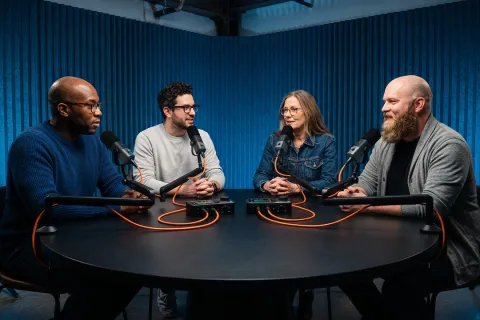
~$1,690 as a matched bundle; ~$2,500–3,700 piecemeal with third-party flagships
Read the table's last row twice, because it is the financial argument of this article: Threshold 2 costs roughly $1,700 if you buy matched mid-range components and up to $3,700 if you buy prestige brands piecemeal — and sponsors cannot tell the difference on playback. What they evaluate is the output: levels, exposure, stability. A show that clears the bar with a $1,700 kit monetizes identically to one that cleared it with $3,700 of flagship gear — the $2,000 difference is margin you keep.
The one place the expensive option genuinely earns its premium: the SM7B-class dynamic mics and mirrorless cameras shine in difficult environments (loud rooms, unusual lighting). If your space is difficult, that premium is a solution, not a flex. If your space is ordinary, it's an expensive answer to a question you don't have. For the full component-by-component math, see our podcast equipment cost breakdown.
The Consistency Clause: Why Reliability Is a Revenue Spec
Here's the mechanism nobody puts in a buying guide. When a sponsor evaluates your show, they don't average your episodes — they sample the last two or three. One episode with a hum, an echo, or a dead camera in your recent catalog discounts your rate or ends the conversation, and it does so after you've done the audience-building work.
That makes reliability features line items on a revenue spreadsheet:
Local recording backup (SD card in the camera, a second audio track) means a software crash never becomes a missing week. A missing week is churn in audience and a gap in the catalog sponsors sample.
Simple signal chains (USB-C cameras instead of HDMI-plus-capture-card, one mixer instead of a patch bay) mean fewer failure points per episode — each adapter is a coin flip you take 52 times a year.
Repeatable settings (gain knobs that stay put, a light on a fixed stand) mean episode 40 sounds like episode 4, which is exactly the consistency a brand is buying.
The cost of ignoring this is concrete. Consider the show that loses one episode a month to preventable failures: twelve missing episodes a year is twelve missing sponsor deliverables you'll owe make-goods on, twelve gaps in the catalog a new listener might sample, and — the quiet killer — a broken weekly habit on the audience side. Listeners forgive a mediocre episode; they do not forgive a show that isn't there. When you price a redundant recorder or a simpler chain, price it against that ledger, not against the component's spec sheet.
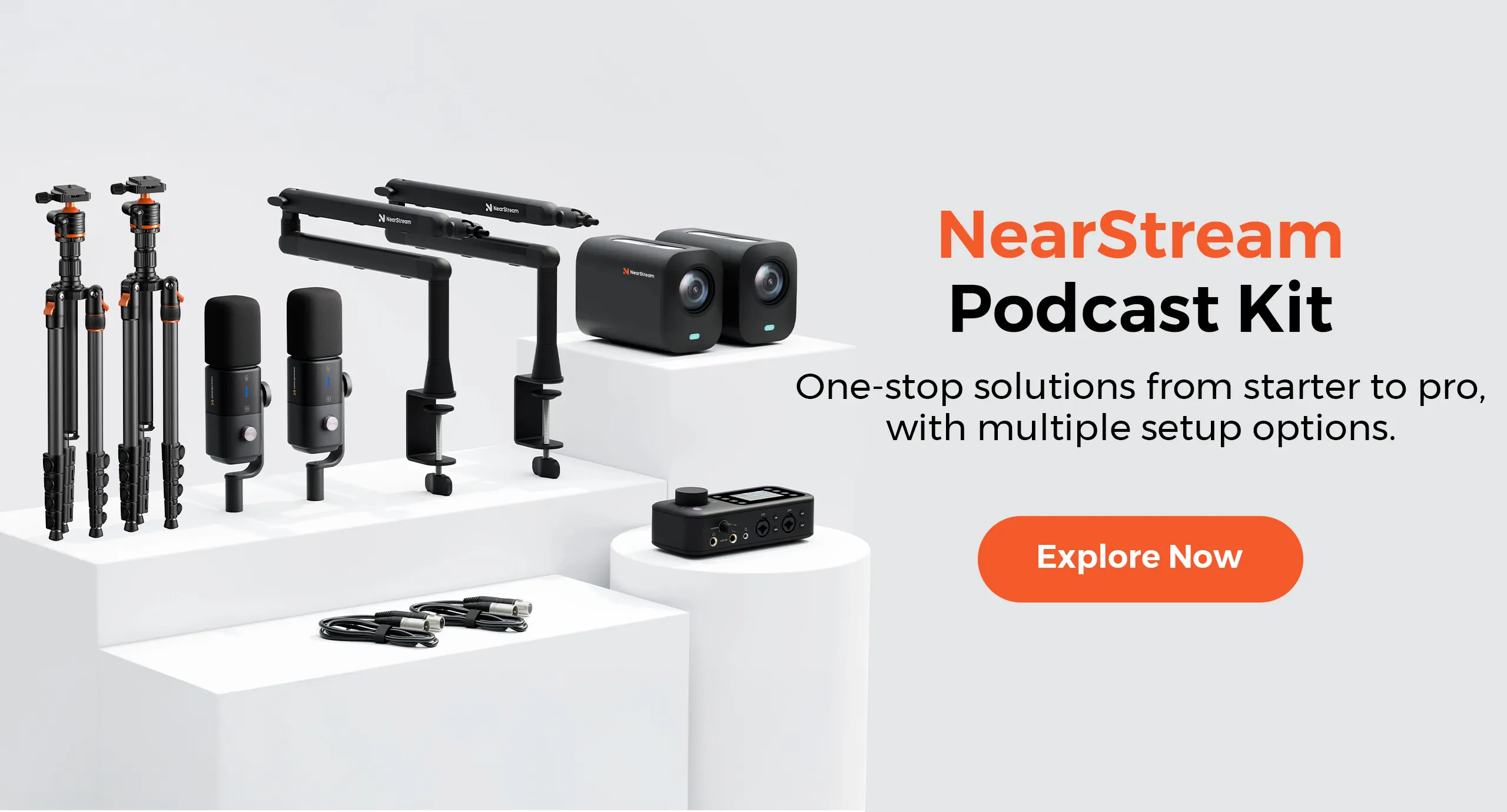
This is also the case for matched kits over piecemeal rigs, stated as neutrally as it deserves: a system whose components were designed together — like NearStream's podcasting bundles, or any integrated alternative — has fewer compatibility failure modes than one assembled across brands. That isn't magic; it's just engineering surface area. The 30-day trial and 12-month warranty that come with such kits are, in monetization terms, insurance on the revenue stream the gear enables.
The Upgrade Triggers That Justify New Spend
Once you're at Threshold 2, "should I upgrade?" stops being a taste question and becomes a checklist question. The legitimate triggers:
A named revenue requirement. A sponsor asks for 4K deliverables, or a platform program requires a quality bar you're below. Revenue is literally requesting the purchase — that's when you buy.
A recurring failure. The same component has cost you two episodes or re-records in a quarter. Price the lost episodes honestly (a missed week costs audience momentum, not just time); if the replacement is cheaper than the losses, replace it.
A time tax you can convert to content. If operating the rig eats an hour per episode that could become another clip or another show, efficiency gear (a simpler chain, a mixer with more channels) pays for itself in output.
Headcount growth. A third regular voice needs a third input, and input count is a hard ceiling — mixers that chain (or a larger board) become a gating purchase overnight. This is the one upgrade you can't schedule around; buy the capacity the week the guest becomes a regular.
Everything else — the shinier camera, the famous-name microphone bought for the logo, the backup-of-the-backup — is consumption dressed as investment. The discipline that keeps shows profitable is boring: money leaves the equipment budget only when one of those four triggers is checked, in writing, in the show's planning doc.
Mapping Spend to Monetization Stage
Stage
Revenue model
Correct equipment posture
Validation (eps 1–20)
None yet — audience building
Threshold 1 only (~$250). Every dollar above this is speculative.
Sponsorship-ready (consistent audience, first sponsor conversations)
Affiliate links, listener support, first mid-rolls, platform video payouts
Cross Threshold 2 (~$1,500–1,700). This purchase is directly revenue-gated: the sponsor's quality bar, YouTube's and Spotify's video programs, TikTok clip quality.
Scale (sponsors renewing, multiple revenue lines)
Programmatic + direct sponsors + live + clips licensing
Spend on what saves time or prevents losses: backup recording, a second light, an operator-proof chain. Buy from revenue, not credit.
The failure mode this table prevents is common enough to name: the stage-1 creator who buys stage-3 gear. A $4,000 rig on a show with no audience doesn't earn faster — it just moves profitability $3,750 further away. Equipment decisions should trail revenue signals by one step, never lead them by three.
A worked example makes the break-even concrete. Suppose crossing Threshold 2 costs $1,700 and unlocks your first sponsor at a modest rate — say a $100 mid-roll per episode on a young show. Seventeen episodes of a single weekly sponsor pays the entire rig back; everything after is margin. Now add the platform payouts the same camera unlocked, plus the affiliate links your clips drive, and realistic payback compresses toward a single quarter. Run the same math on the $3,700 flagship route and the payback doubles — for audio your sponsor literally cannot distinguish. That's the whole argument for buying the threshold instead of the dream.
If you're building toward your first sponsor conversations, the practical checklist is: three consecutive episodes at Threshold 2 quality, a one-page media kit with real numbers, and clips that prove your show travels. The TikTok clips workflow handles the last part; the YouTube pillar prices the whole stack in detail.
One last staging note on timing your Threshold 2 purchase: the right moment is usually when you can see the revenue — a sponsor conversation in progress, a platform program you're one requirement short of, an audience curve that's clearly compounding. Buying the studio three months before that moment is optimism; buying it three months after is leaving money on the table. Most shows get one clean shot at the transition, so let the revenue signal, not the excitement, set the date.
Frequently Asked Questions
What equipment do I need before sponsors will pay for ads on my podcast?
One XLR-capable microphone per speaker, positioned close; a mixer or interface with matching input count; and — for video — a stable, well-lit frame. Solo, that's about $250; a two-person video show runs $1,500–$1,700. Sponsors almost never ask what you own: they listen to your last three episodes and glance at your video. What disqualifies shows is inconsistency, not mid-range brands.
Can expensive podcast equipment increase my revenue directly?
Indirectly, and only by removing blockers. Your ad rates are set by audience size and niche, not by your microphone. What equipment does: clears the quality bar sponsors and video platforms require, prevents lost episodes (which cost real money), and unlocks video revenue channels. Think of each purchase as deleting a reason someone would say no — once no reasons remain, further spending has no revenue effect.
How much should I spend on podcast equipment before I'm monetized?
About $250 solo — enough to never distract a listener. Resist the urge to pre-invest for a future audience: money spent before revenue is a loan you're making to a show that hasn't proven its format. The right trigger for the next tier is a concrete revenue opportunity (a sponsor asking about video, eligibility for a platform payout), not a calendar date.
Does video equipment help podcast monetization?
Yes — it's the single highest-leverage addition after audio. One camera and one light turn each recording into a YouTube video (ad revenue), a Spotify video episode (Partner Program payouts), and a week of TikTok clips (discovery that grows everything else). Audio-only shows can monetize, but they're locked out of three channels that, for most shows, eventually out-earn audio ads.
What's the biggest equipment mistake that kills podcast monetization?
Inconsistency. A sponsor or platform samples your recent episodes, so a single echo-filled or dead-camera episode in your last three does disproportionate damage. The prevention is boring and cheap: a simple, reliable chain you can operate identically every week, with local backup recording so a crash never costs an episode. A modest rig that never fails beats a flagship rig that fails twice a quarter.
The Bottom Line
Equipment pays for itself when you buy thresholds, not dreams: ~$250 to become listenable, ~$1,700 to become sponsorship-ready, and revenue-funded spending after that. Cross them in order, and every dollar of gear has a revenue event on the other side of it. When you're ready to price Threshold 2 for your specific room and headcount, our kit buying guide compares bundle-vs-piecemeal honestly, and the podcasting solutions page has a configuration service that prices matched setups — worth a look alongside the third-party options priced above, so you can compare like for like.
If you take one sentence from this guide, make it the question that disciplines every future purchase: which revenue line does this unlock, and what's the payback in episodes? Gear that answers that question clearly is an investment with a payback you can schedule. Gear that can't is a hobby expense — which is fine, honestly, as long as you budget it as one and stop expecting it to earn its shelf space.











 sales@nearstream.us